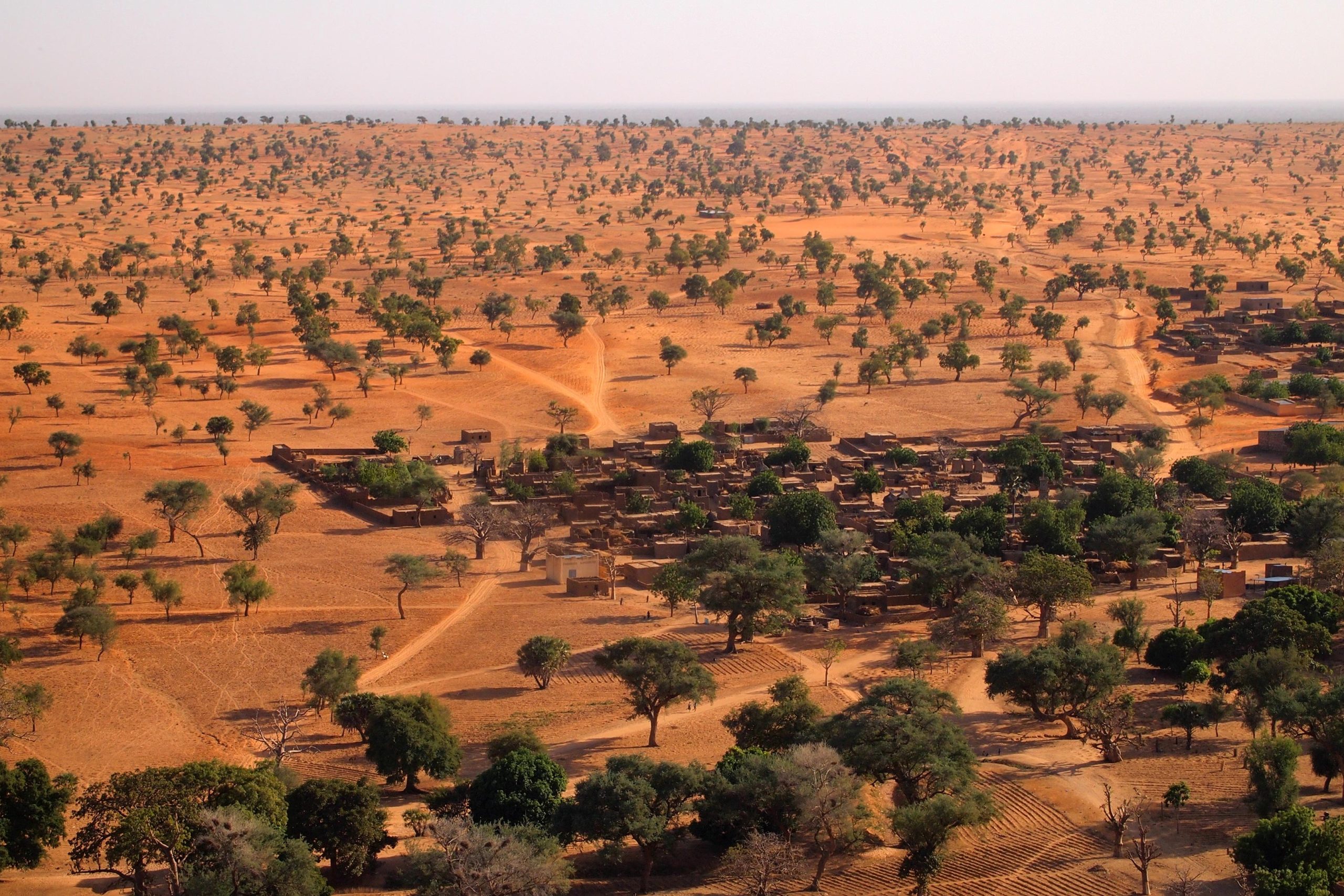
In a NASA-led study, scientists mapped almost 10 billion individual trees in semi-arid regions of Africa, such as the one shown here. Credit: Courtesy of Martin Brandt, University of Copenhagen, Denmark
Using commercial, high-resolution satellite images and artificial intelligence, an international team including
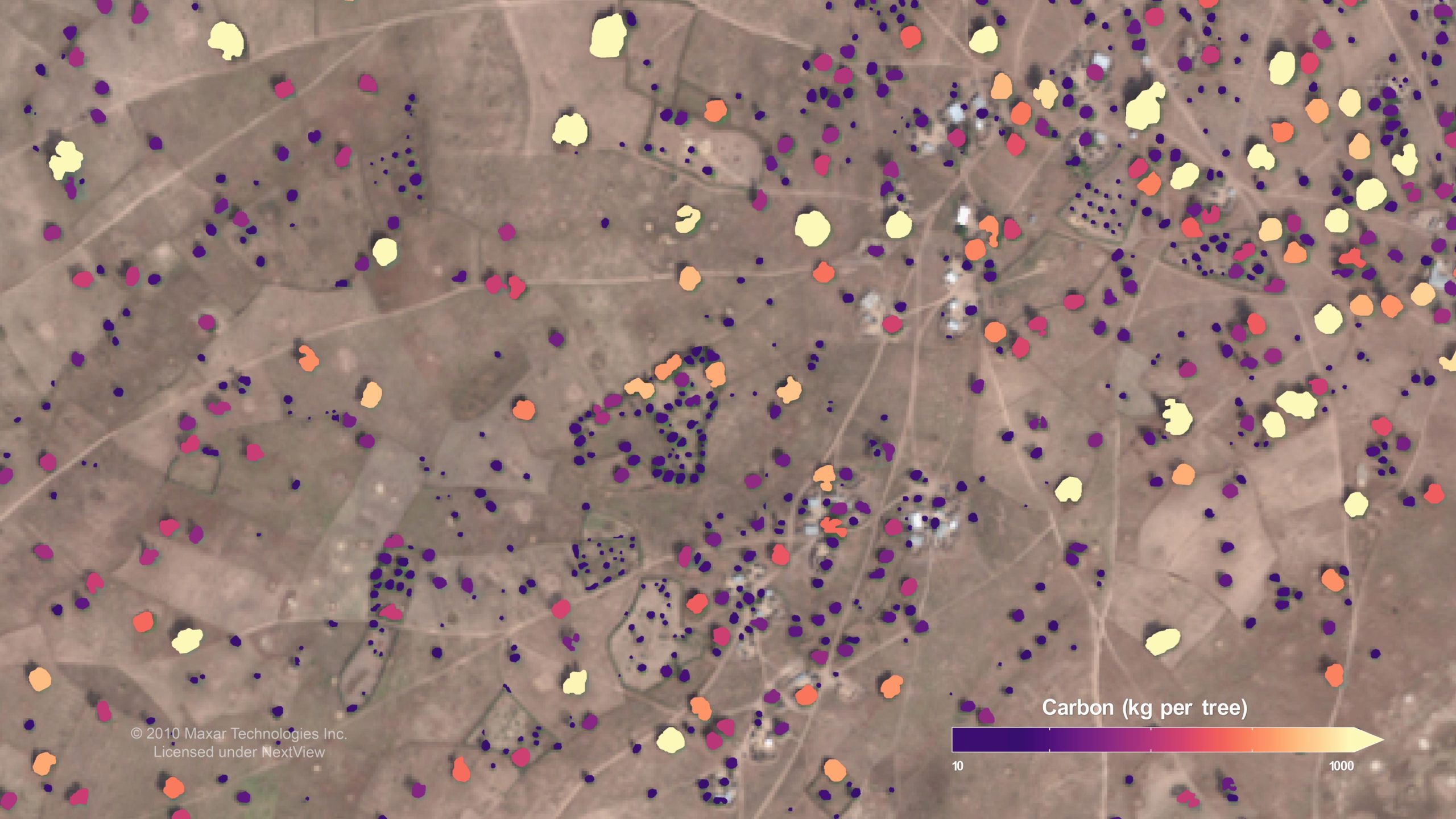
Individual trees identified in satellite imagery, color mapped by the amount of carbon they contain. Deep purple indicates lower carbon levels; yellow-white indicates higher levels. Credit: NASA’s Scientific Visualization Studio
Beyond the vast tropical forests spread across the middle of the continent, African landscapes range from dry grasslands with a few trees to savannahs with scattered trees to more humid areas with many scattered trees. This dispersed tree cover has made it difficult for scientists working to estimate the number of trees in these areas, and there have often been over- or underestimates. Yet such measurements are essential for conservation efforts and for understanding the carbon cycle on our planet.
“Our team gathered and analyzed carbon data down to the individual tree level across the vast semi-arid regions of Africa or elsewhere – something that had previously been done only on small, local scales,” said Compton Tucker, lead scientist on the project and an Earth scientist at NASA’s Goddard Space Flight Center in Greenbelt, Maryland. Previous satellite-based estimates of tree carbon in Africa’s drylands often mistook grasses and shrubs for trees. “That led to over-predictions of the carbon there.”
Scientists mapped the sparse tree cover in semi-arid Africa in order to better calculate how much carbon is being stored. Credit: NASA’s Goddard Space Flight Center
Carbon is constantly cycling between the land, the atmosphere, the ocean, and back. Trees remove carbon dioxide – a greenhouse gas – from Earth’s atmosphere during the process of
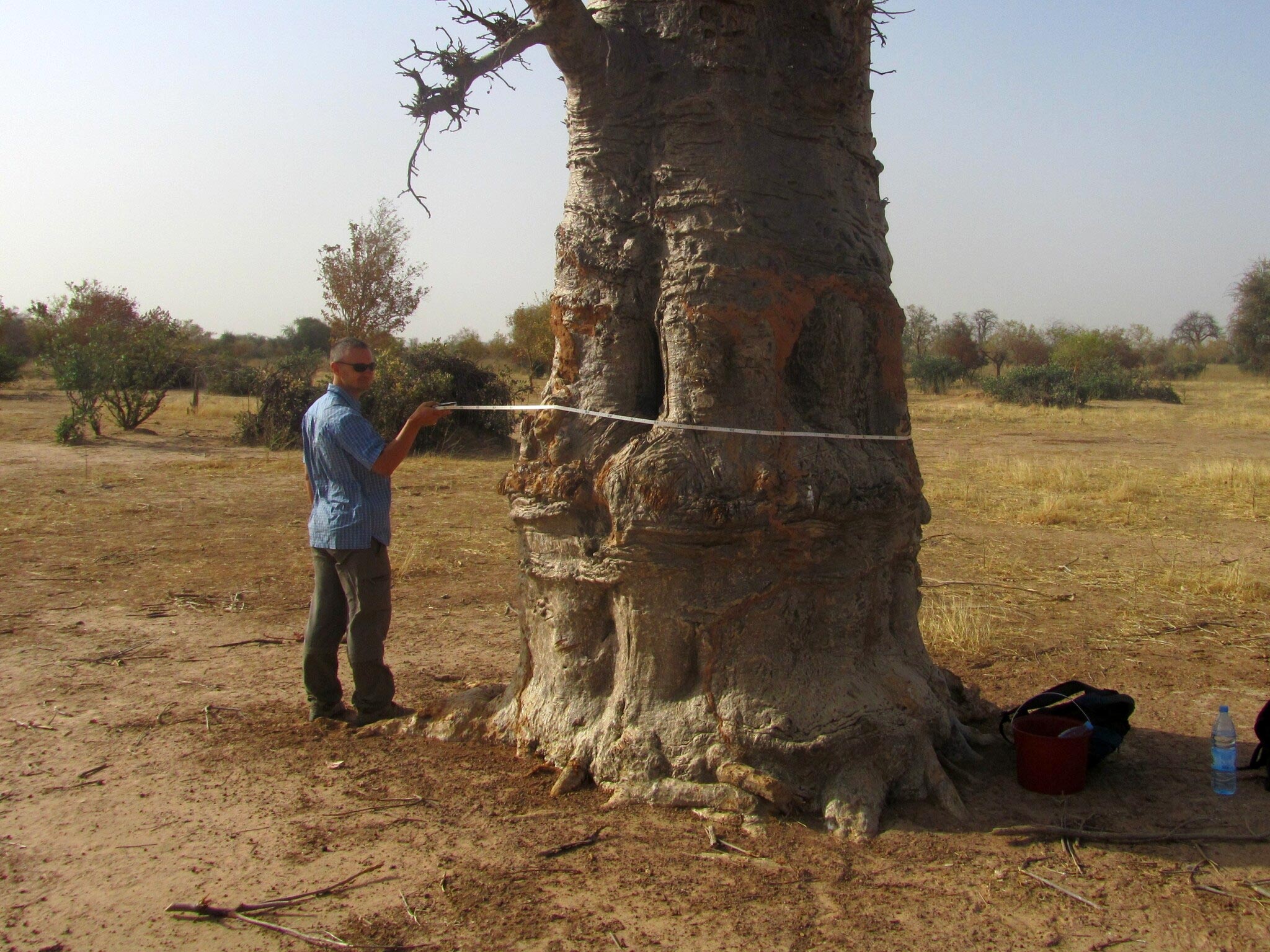
Scientists measured the circumference of trees and took other measurements to help relate tree crown area in the satellite images to how much carbon is stored. Credit: Martin Brandt, University of Copenhagen, Denmark
Martin Brandt of the University of Copenhagen compiled AI training data from 89,000 individual trees. Colleague Ankit Kariyaa, also at Copenhagen, adapted a neural network so that computers could detect the individual trees in high-resolution 50-centimeter scale images of Africa’s drier, less verdant landscapes.
The researchers defined a “tree” as anything with a green, leafy crown and an adjacent shadow. From this, they trained the machine learning software to count the trees during millions of hours of supercomputing on the Blue Waters supercomputer at the University of Illinois. When the team compared their machine-learning results with human assessments of the landscape, the computers were 96.5% correct in measuring tree-crown area.
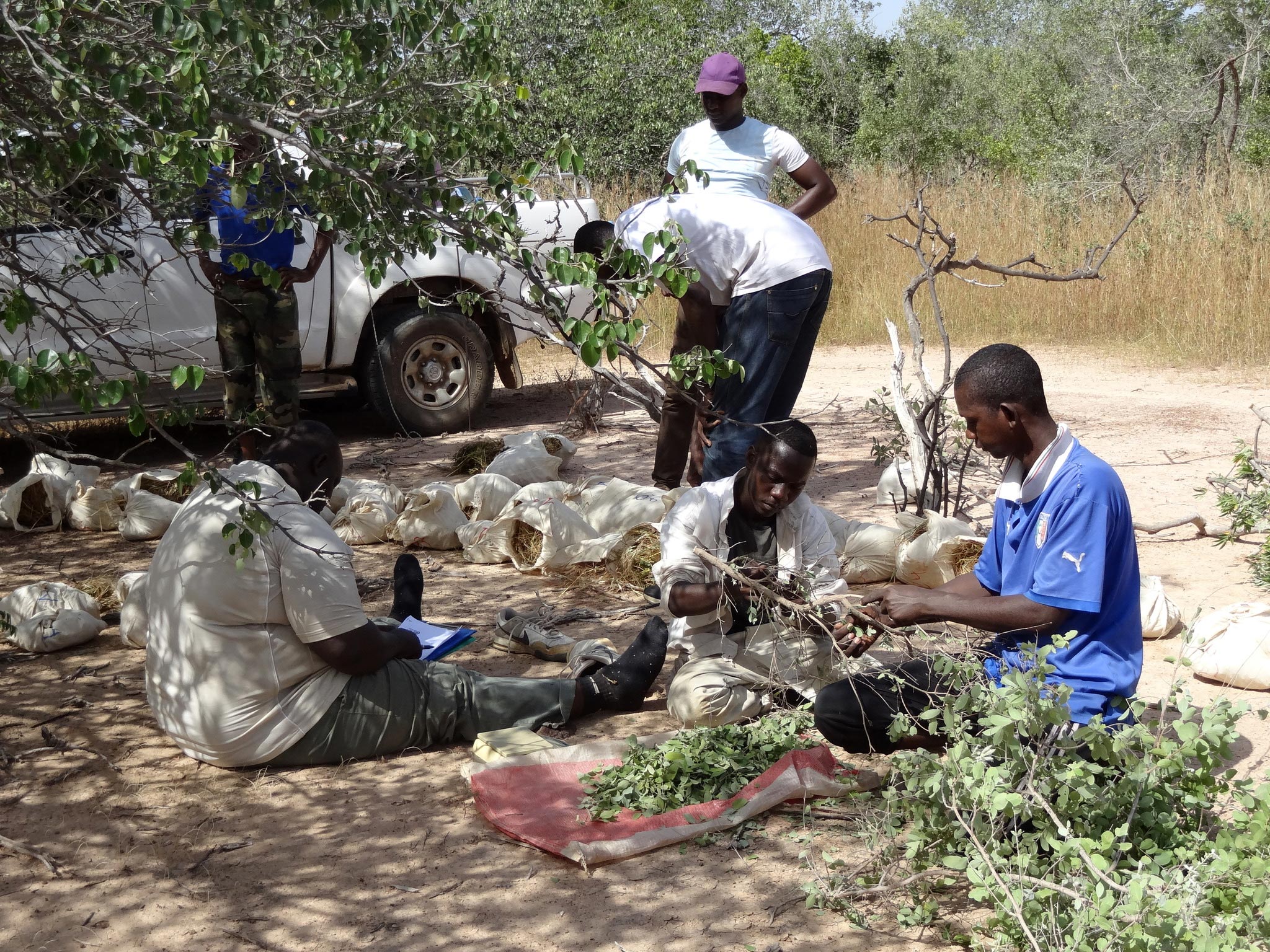
Field scientists measure the area of tree crowns and the associated masses of leaves, roots, and roots, of every tree in the allometry used to determine how much carbon is stored within different parts of the tree. The laborious work is necessary to convert tree crown area into carbon estimates of trees. Credit: Martin Brandt, University of Copenhagen, Denmark
From measurements of tree crown area, the scientists can derive the amount of carbon in each tree’s leaves, roots, and wood using allometry – the study of how the characteristics of living creatures change with size. A group led by Pierre Hiernaux of the University of Toulouse examined 30 different publicly available with a viewer app developed by the team. It allows people to view every tree in the study area and the amount of carbon it stores.
These data could be useful for scientists and students studying the carbon cycle, policymakers trying to improve conservation efforts, and farmers who want to determine the carbon stored in their farm.
Reference: “Sub-continental-scale carbon stocks of individual trees in African drylands” by Compton Tucker, Martin Brandt, Pierre Hiernaux, Ankit Karirya, Kjeld Rasmussen, Jennifer Small, Christian Igel, Florian Reiner, Katherine Melocik, Jesse Meyer, Scott Sinno Eric Romero, Erin Glennie, Yasmin Fitts, August Morin, Jorge Pinzon, Devin McClain, Paul Morin, Claire Porter, Shane Loeffler, Laurent Kergoat, Bil-Assanou Issoufou, Patrice Savadogo, Jean-Pierre Wigneron, Benjamin Poulter, Philippe Ciais, Robert Kaufmann, Ranga Myneni, Sassan Saatchi and Rasmus Fensholt, 1 March 2023, Nature. DOI: 10.1038/s41586-022-05653-6