


Q2-2023 update. Photography has become the defining feature of modern smartphones. Thanks to incredible leaps in camera technology smartphones are now at a point where they can easily replace traditional digital point-and-shoot cameras. Complex software algorithms ensure that even a spontaneous snapshot will look great. Below, you will find the best camera smartphones reviewed by us.
The time of digital compact cameras is over. Smartphone cameras and their sensors as well as the corresponding miniature lenses, but especially the picture editing software have improved so much by now, that smartphone cameras can easily replace average compact cameras. At least the best smartphones, because there are still big differences in terms of picture quality.
For this reason, we have this list of the best photo smartphones that are particularly well-suited for taking photos, and that have scored exceptionally well in this category in our tests. You will also find a photo comparison at the end of this article. Please also consider the following top lists before making any purchasing decisions:
- The best High-End Smartphones
- The best Phablets (Smartphones> 6.8″)
- The best Smartphones smaller 6.5″
- The best Smartphones under 500 Euros (600 USD)
|
Position |
Camera Rating |
Total Rating |
Date |
Image |
Model |
Height |
Weight |
Size |
Resolution |
|---|---|---|---|---|---|---|---|---|---|
| 1 | 83.4 % | 88.8 % |
03/2022 |
Huawei P50 Pro Qualcomm Snapdragon 888 4G Qualcomm Adreno 660 8 GB Memory, 256 GB |
8.5 mm | 195 g | 6.60″ | 2700×1228 | |
| 2 | 82.4 % | 91.2 % |
03/2023 |
Samsung Galaxy S23 Ultra Qualcomm Snapdragon 8 Gen 2 for Galaxy Qualcomm Adreno 740 12 GB Memory, 256 GB |
8.9 mm | 233 g | 6.80″ | 3080×1440 | |
| 3 | 81.8 % | 89.1 % |
11/2022 |
Google Pixel 7 Pro Google Tensor G2 ARM Mali-G710 MP7 12 GB Memory, 128 GB |
8.9 mm | 212 g | 6.70″ | 3120×1440 | |
| 4 | 81.2 % | 88.8 % |
09/2022 |
Xiaomi 12S Ultra Qualcomm Snapdragon 8+ Gen 1 Qualcomm Adreno 730 12 GB Memory, 256 GB |
9.1 mm | 225 g | 6.73″ | 3200×1440 | |
| 5 | 81 % | 90.3 % |
01/2023 |
Apple iPhone 14 Pro Apple A16 Bionic Apple A16 GPU 5-Core 6 GB Memory, 256 GB NVMe |
7.85 mm | 206 g | 6.10″ | 2556×1179 | |
| 6 | 80.8 % | 88.5 % |
11/2022 |
Google Pixel 7 Google Tensor G2 ARM Mali-G710 MP7 8 GB Memory, 128 GB |
8.7 mm | 197 g | 6.30″ | 2400×1080 | |
| 7 | 80.6 % | 84.1 % |
09/2022 |
Huawei Mate Xs 2 Qualcomm Snapdragon 888 4G Qualcomm Adreno 660 8 GB Memory, 512 GB |
11.1 mm | 255 g | 7.80″ | 2480×2220 | |
| 8 | 80.2 % | 90.1 % |
04/2023 |
Honor Magic5 Pro Qualcomm Snapdragon 8 Gen 2 Qualcomm Adreno 740 12 GB Memory, 512 GB |
8.77 mm | 219 g | 6.81″ | 2848×1312 | |
| 9 | 80.2 % | 89.2 % |
04/2022 |
Oppo Find X5 Pro Qualcomm Snapdragon 8 Gen 1 Qualcomm Adreno 730 12 GB Memory, 256 GB |
8.5 mm | 221 g | 6.70″ | 3216×1440 | |
| 10 | 80 % | 88.5 % |
09/2022 |
Vivo X80 Pro Qualcomm Snapdragon 8 Gen 1 Qualcomm Adreno 730 12 GB Memory, 256 GB |
9.1 mm | 215 g | 6.78″ | 3200×1440 |
The table above contains an overview over the best camera smartphones reviewed by Notebookcheck over the course of the past 12 months as well as still relevant and available older products. In cases of identical score the more recent device is listed first. All prices in above table and price comparisons are updated daily and can thus differ.
Link: all devices in this class reviewed
The showpiece of the Huawei P50 Pro is the quad camera system on the back, which is made up of a total of four sensors. The primary camera is equipped with a 50 MP True Chroma sensor and benefits from an optical image stabilizer as well as the new Huawei XD Optics and XD Fusion Pro Image Engine. Furthermore, the main camera is complemented by an additional 40 MP monochrome camera. In combination, it helps the 50 Pro achieve a wide dynamic range, crisp contrasts, and vivid colors.
Those who are not put off by the lack of Google services will find a premium smartphone with a strong camera in the P50 Pro.
Apart from the strong camera qualities of the P50 Pro, the effects of the trade embargo are now more noticeable than in the predecessor. In terms of display brightness, the Chinese manufacturer falls further behind the flagship competition. Furthermore, important features, such as 5G support, are missing.
The Huawei P50 Pro is available from Huawei Global in various countries.
The Galaxy S23 Ultra is one of the best smartphones currently available on the market. The Galaxy phone is a consistent further development of the flagship predecessor and impresses with high value, a lot of performance and extensive features as well as a five-year update warranty.
The cameras of the Samsung Galaxy S23 Ultra are not only among the best in their class, but also offer a particularly wide range of applications due to the many supported focal lengths.
With the Galaxy S23 Ultra, Samsung relies on its HP2 sensor for the first time, which provides an enormous resolution of 200 MPix. However, the high resolution is mainly used for pixel binning, whereby the Galaxy phone has the option to choose between 12.5 MPix and 50 MPix shots for the first time. In our review and camera tests (Test 1, Test 2, Test 3), Samsung’s flagship convinces with many details and an improved ultra-wide-angle sensor. High-quality magnification lenses for a lossless 3x and 10x zoom are also on board.
The Samsung Galaxy S23 Ultra can be purchased directly from Samsung, but is also available from usual retail channels such as Amazon.

The camera setup of the Google Pixel 7 Pro is very similar to that of the Pixel 6 Pro. The main camera still uses a 50 MP sensor from Samsung and takes really good photos. The dynamic range in the photos is high across the entire subject, but it reveals weaknesses in the details. The camera setup on the back is completed by an ultra-wide-angle lens with 12 MP and a very good 48 MP telephoto lens that achieves a five-fold optical magnification. The 10.8 MP front-facing camera has to accept some drawbacks due to very blurry pictures.
Selfies are not the Pixel 7 Pro’s strength, but Google’s phone offers a lot of picture quality on the back.
In our detailed review, the Pixel 7 Pro convinces with a bright display, a long update period, and strong features. The new Tensor G2 also enables some new features – but Google’s SoC cannot keep up with other premium chipsets in terms of speed.
While you can purchase the Google Pixel 7 Pro directly from the online shop of the manufacturer, alternatively it is also available from other vendors such as Amazon.
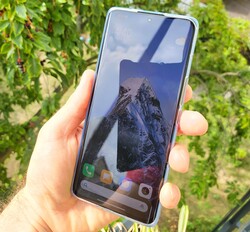
The Xiaomi 12S Ultra shows itself to be very well positioned in the camera department with the new Leica partnership and the Sony IMX989 as the image sensor. On the back, the Xiaomi flagship has three lenses. In addition to the 1-inch IMX989 with 50 megapixels (23 mm), two 48-megapixel sensors are used for the ultra-wide-angle (13 mm) and periscope camera with five times the optical zoom (120 mm).
The excellent image quality in daylight and low-light as well as the natural bokeh convinced us in the review. However, Xiaomi lags behind the competition with the lack of a UHD video recording option on the front camera and the somewhat lower-quality ultra-wide-angle camera.
The Xiaomi impresses with a great camera system, especially the bokeh in the pictures makes the 12S Ultra special due to the large image sensor.
Apart from the cameras, the Xiaomi 12S Ultra offers a strong overall package consisting of a bright and high-resolution OLED panel, long runtimes and a high-quality look. However, the high-end smartphone from the Chinese manufacturer has one drawback – it is only available as an import for German-speaking countries.
Xiaomi devices are not officially sold in North America.
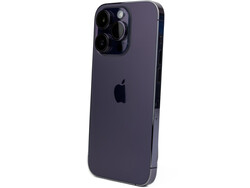
With the iPhone 14 Pro, Apple is now breaking new ground in the field of photography. Android users will certainly find pixel binning to be old hat, but Apple uses this method for the first time along with the new 48 MP sensor of the main camera. Pixel binning is supposed to provide better pictures in less light, but also more details in the pictures, according to experience. Unfortunately, Apple only leaves a limited choice to the user in terms of image size and almost always outputs a 12 MP photo.
The picture quality is pleasing in daylight in the test and is characterized by a balanced picture composition with fine details and natural-looking colors. In general, the iPhone 14 Pro also achieves good results in low-light scenarios. The basis for zooming is a triple optical magnification, and the ultra-wide-angle sensor still only delivers 12 MP.
From a technical point of view, Apple actually does almost everything right; only small weaknesses can be criticized.
Apple has made a real step in its own evolution with the iPhone 14 Pro. The form factor remains the same, but the Apple flagship gets a new and very powerful chipset, improved cameras and the latest iOS version compared with the predecessor.

The little brother of the Pixel 7 Pro is the Google Pixel 7. Besides the 50 MP main camera including a Samsung sensor, Google gives the setup a 12 MP ultra-wide-angle lens on the back. Unlike the Pro model, enlargements can only be made digitally with the Pixel 7. However, there is nothing to complain about in terms of the main camera’s shooting quality considering the Pixel phone’s low pricing. Photos turn out very detailed and offer nice colors.
The Google Pixel 7 is a strong mid-range smartphone along with a great main camera. It is hardly possible to get more camera smartphone for little money.
Apart from the camera qualities, the successful overall package of Google’s phone ranges from the fast Tensor SoC, the bright and color-accurate OLED display to the good battery runtime. Another advantage of a Pixel smartphone is of course the long update supply.
While you can purchase the Google Pixel 7 directly from the online shop of the manufacturer, alternatively it is also available from other vendors such as Amazon.

The Huawei Mate Xs 2 uses a 50 MP True Chroma sensor, which scored with a very good picture quality in the test, even in low light. The 13 MP ultra-wide-angle lens is also convincing, but Huawei no longer relies on a high-resolution sensor, which is a bit of a shame. The telephoto camera’s triple optical zoom also delivers good results, but only shows an average imaging performance in the digital zoom.
We do not only like the extravagant folding concept in everyday use, but also the overall camera package of the Huawei Mate Xs 2 – especially for a foldable.
Besides the strong main camera, the Huawei smartphone takes a big step forward compared with the predecessor especially in terms of value and hinge architecture. The flexible OLED display is also much brighter now and even works with a fast 120 Hz refresh rate.

The Honor Magic5 Pro offers a 50 MPix main camera, which knows how to convince with balanced shots in daylight and with a high camera speed. But even in darkness, appealing photos can be obtained with the 1/1.12″ image sensor thanks to OIS, even when the subjects are very bright. The camera system is completed by an ultra-wide-angle lens with 50 MPix as well, which can come up with respectable photos including a detailed depth of field, and a 50 MPix telephoto lens. The latter ensures competitive pictures with a 3.5x optical magnification.
Overall, the Honor Magic5 Pro takes good to very good pictures. The high-end smartphone from the Chinese manufacturer offers a very complete camera package.
In our review, the Honor smartphone convinces with its bright and 120 Hz fast LTPO display as well as a strong system performance and well-rounded equipment package. Honor has also extended the update supply for its high-end smartphones to 4 years.
Honor’s devices are not official available in North America.
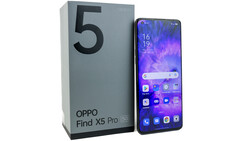
Oppo manages a strong flagship with its Find X5 Pro 5G including an accurate display with adaptive refresh rate, long battery runtimes and fast charging. However, the focus is primarily on the installed cameras. This is underlined by the additional MariSilicon X image processor and the cooperation with Hasselblad.
Those looking for a really good ultra-wide-angle might find their suitable companion in the Find X5 Pro.
The rear-facing camera setup of the Find X5 Pro has the same sensors as last year, but now more glass lens elements are used and the image stabilization is composed of a 3-axis sensor shift as well as a 2-axis OIS. The 50 MP main camera with Sony’s IMX766 takes really good pictures and especially the stabilization convinced us.
We can find Oppo Find X5 Pro at all well-known retailers. Amazon offers it at around $1,100.
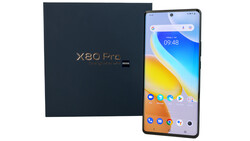
The showpiece of the Vivo X80 Pro is the Zeiss camera setup on the back, including a 50 MP main sensor with gimbal stabilization. This is joined by two optical zooms for a 2x and 5x magnification as well as an ultra-wide-angle lens. Photos taken in daylight with all lenses were convincing in the test and delivered a correspondingly good image quality. Those who prefer natural colors can also activate the Zeiss mode.
Vivo puts together a strong camera package with the German company Zeiss. The cooperation not only includes the Zeiss lenses, but now also software algorithms for the lenses since the X80 Pro.
The Vivo X80 Pro is one of the best Android smartphones available in the review period not only because of the strong cameras. The Vivo flagship convinces with an accurate LTPO AMOLED screen and an almost complete configuration.
On the European mainland, the Vivo X80 Pro appears to be widely available via popular online retailers. Outside the European mainland, availability becomes sporadic.
Notebookcheck (Update: 2023-05-31)