

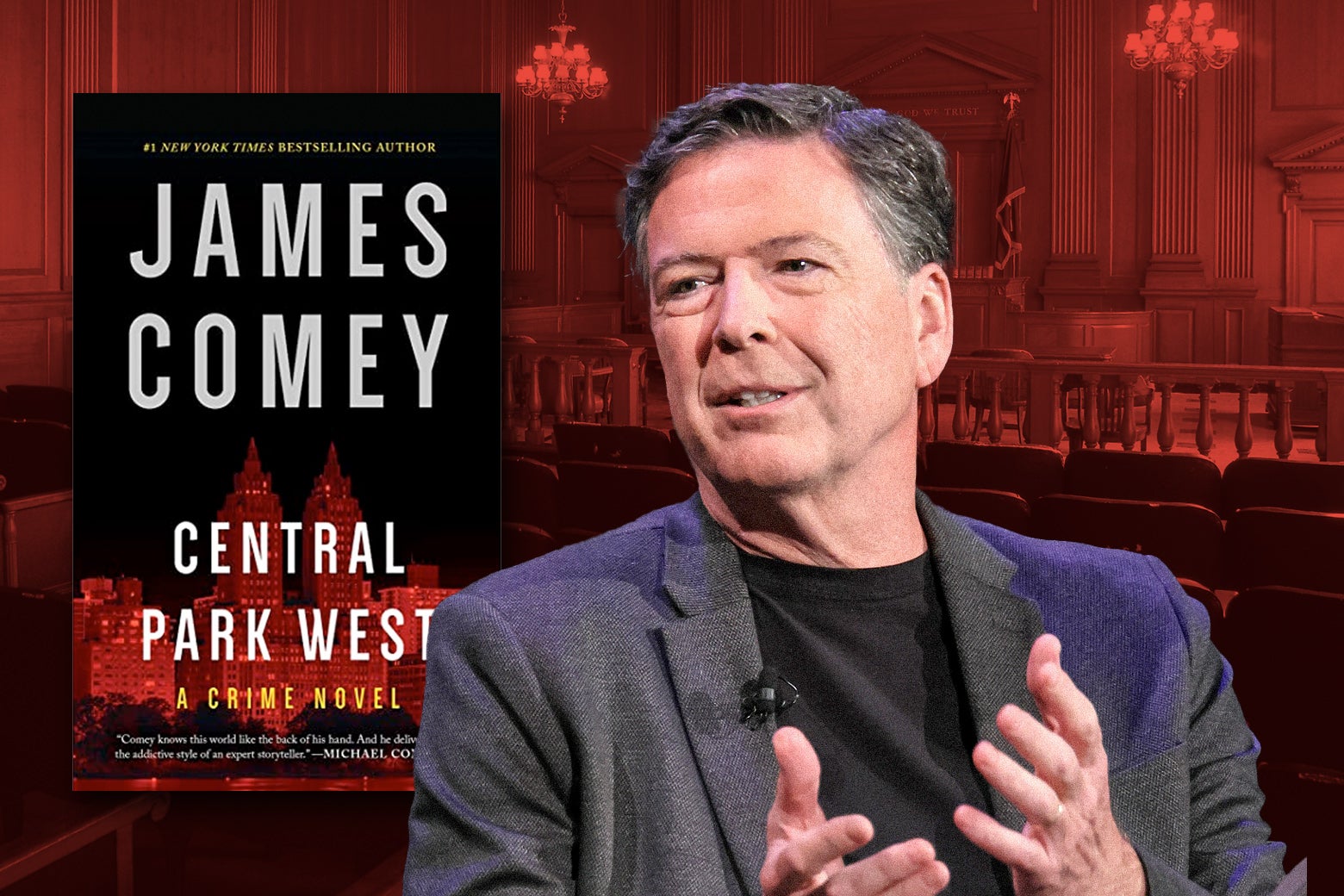
Few people are as widely despised in American public life as former FBI Director James Comey. Many on the left believe (fairly) that his actions during the 2016 presidential campaign resulted in the election of Donald Trump, while many on the right blame him (preposterously) for having the audacity to authorize a criminal investigation to determine whether the Trump campaign was working with the Russian government.
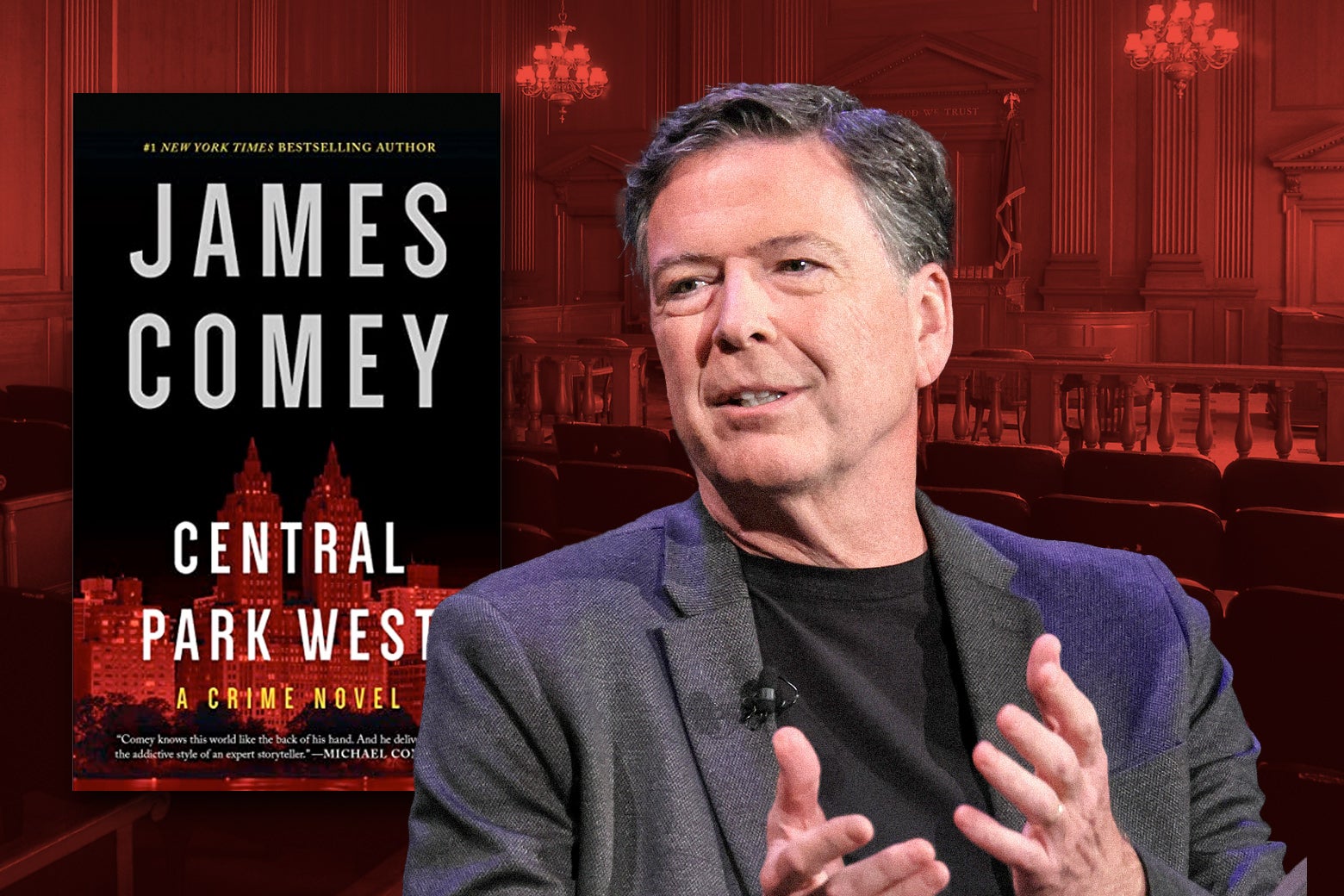
So it is not particularly surprising that the knives are out for Comey following the release last week of his debut novel, a crime thriller titled Central Park West. The reviewer for the Washington Post trashed the story and the writing before concluding that “helping to deliver four years of Donald Trump is not the worst thing Comey has ever done.” A critic at the New Republic argued that Comey had “produced any other middle-aged lawyer’s clunky but passable fling at that courtroom novel he always threatened to write.” The headline on the review over at Bloomberg was similarly to the point: “Former FBI Director James Comey Has Written a Very Bad Crime Novel.”
Is it really that bad? I was intrigued by the prospect of Comey’s first fiction outing, and I was prepared for it to be—on some level hoping that it would be—awful. One reason is that I share the view held by many on the left about Comey’s bungling during the 2016 presidential campaign. Another reason—one that I suspect is also in play among some of the reviewers—is that professional writers tend to enjoy seeing prominent people try their hand at something new and fail miserably at it. It helps to validate writers’ otherwise precarious sense of self-worth, and the occasional high-profile flop also provides an opportunity for sharp and entertaining takedowns.
I would not go so far as to say that Central Park West is particularly good or that anyone should buy it, but it is not as bad as I expected. In fact, it is a middling but modestly entertaining fiction offering—one best appreciated as a legal procedural in the vein of a decent but forgettable episode of Law & Order. Ironically, the evident sincerity and undeniable mediocrity of the effort are its most endearing qualities. (Comey has proposed—or perhaps threatened—to make a career out of this.) The former FBI director tried something new, and it turns out he is OK at it, at best. Controversial government officials: They’re just like us!
Let’s start with the plot—and from here on out, I am spoiling the whole thing—which is mostly preposterous.
The story kicks off with the murder of a disgraced former governor of New York who is killed after being accused of sexual misconduct by numerous women. Sound familiar? (Subtlety is not one of Comey’s virtues as a writer.) The governor’s ex-wife, Kyra Burke, is at first the main suspect thanks to the fact that she looks a lot like the killer, who was captured on video going up to her ex-husband’s apartment the night that he was killed by a fatal insulin injection. The Manhattan district attorney’s office charges Burke with the murder, but the jury hangs after a lone juror holds out.
Meanwhile, federal agents working with a prosecutor named Nora Carleton in the U.S. attorney’s office in Manhattan separately pursue a lead indicating that the murder was (for some unexplained reason) a mob hit. Carleton, the ostensible hero of the book, is a single mother struggling to juggle her work and personal life (yada, yada). The federal investigation forms the centerpiece of the book’s narrative, and it eventually leads to a legendary mob hitwoman who appears to have killed the former governor after disguising herself to look like Burke. Carleton eventually convicts the hitwoman in court, and in the process Burke appears to have been exonerated. The big twist at the end is that the murder was likely orchestrated by Burke, who has since managed to take her dead ex-husband’s job as governor of New York and ends the book as a free woman. (Whether she will remain in that position is a question that Comey appears to have deliberately left open for a sequel.)
By itself, this would not be a particularly bad outline for a crime novel, but many of the details are absurd. Along the way, for instance, we learn that Carleton may be gay or bisexual and that she also had a yearlong semiromantic relationship with Burke while the two were in college. Bizarrely, she never seriously considers this as a reason to recuse herself from the investigation, even as her work is seriously compromised by her personal connection to the case. The U.S. attorney who runs Carleton’s office also turns out to be a politically connected, self-important dimwit who is carrying on an affair with a younger female prosecutor in the office—all of which is in fact eminently plausible except for the part where they do basically nothing to conceal it, which allows a member of Carleton’s team to blackmail him when they need him to stop meddling in their work.
Though the proceedings in Central Park West move along briskly, the path is far from smooth, mostly because the writing is often highly cringeworthy. The clichés pile up quickly. The ex-governor is “the Harvey Weinstein of politics.” A preppy political operative looks like he is “just back from a J. Crew fashion shoot.” Later, when he testifies in court, he looks “like he’d just walked off the runway at a Milan fashion show.”
The diction and dialogue throughout the book are also awful. Much of this has to do with Comey’s peculiar decision to treat the mob figures and the lead federal agent as anachronistic, old New York archetypes. They use the phrase “fugetaboutit” and the word “dough” to describe money. They say “to understand” and “youse” several times each, throughout the book.
The clipped style of dialogue runs throughout the book and is one of its most annoying features. So far as I can tell, it is supposed to convey just how busy everyone is and how quickly the investigation is moving, but the device is stretched well beyond its breaking point. There is somehow no time for subjects or prepositions, even when a junior FBI agent is describing her Thanksgiving travel plans to her colleagues in a sit-down meeting: “Flight early tomorrow to San Fran to see my family. Back Sunday.”
Even when the sentences are complete, the dialogue is frequently lazy, awkward, or both. When Carleton’s lead agent blackmails the U.S. attorney, he tells the guy, “Look, I could give a shit where you put your dick, but I’m guessing your wife cares.” At another point the same agent—a grizzled veteran type, naturally—observes to Carleton, “Yup, this work is pretty fucked up, ain’t it, kid?”
Elsewhere in the book, a lawyer appears to outmaneuver his opponent in court and his internal monologue is actually presented to the reader as “How you like them apples?”—a phrase that I have not heard anyone use unironically since the 1997 movie Good Will Hunting.
The awkwardness extends beyond the avalanche of hackneyed one-liners. A whole essay could be written about Comey’s struggle to credibly align the story with modern liberal sensibilities concerning race and sex. Carleton’s supervisor, for instance, is a Puerto Rican lesbian who is described as a “ball of energy and humor.” In the same vein, after Burke escapes conviction by the Manhattan district attorney’s office, the junior FBI agent, who is Black, observes, “Innocent white people getting prosecuted? Wow. Who says things don’t change in this country?”
Despite these considerable problems, the result is still a tolerable legal procedural grounded by Comey’s undeniable expertise in federal investigations, which tend to be much more boring than the public thinks, even when the investigation is about murder. At various points, he describes how some key prosecutorial tools work, like use-immunity (or “queen for a day”) agreements and cooperation deals, and he demonstrates how and why lawyers use evidentiary stipulations at trial for tactical reasons that go beyond mere time-saving. A key part of Burke’s trial defense turns on a narrow point in the law on hearsay, which, as Comey capably demonstrates, is much more permissive and flexible than the public generally understands.
Central Park West also brims with references to otherwise obscure or subtle features of the law and prosecutorial practice, particularly in New York. The narrative structure of the book relies crucially on the relationship—often awkward and competitive—between state prosecutors in the Manhattan DA’s office and federal prosecutors in the Southern District of New York. There is also an amusing and relatable episode (for lawyers, at least) involving a note that is passed to Carleton by her supervisor in the middle of a trial that she hopes will get her out of a tough spot but that turns out to be totally useless.
Even the central mechanism for solving the mystery feels grounded in Comey’s real-world experience regarding the banality of forensic investigative procedure: As it turns out, the hitwoman’s go-to Starbucks order proves to be her downfall. And as Comey demonstrates in the book, the process of collecting and analyzing this sort of digital detritus is in fact central to federal criminal investigations of pretty much all types today. That may not be particularly sexy, but it certainly rings true.
I would not expect Comey to pick up any book prizes for Central Park West any time soon, but there are worse things in life than writing an uninspired book. I would tell him not to quit his day job or some such, but so far as I’m concerned, the country is much better off with Comey as a second-rate fiction writer than a high-powered government official.