

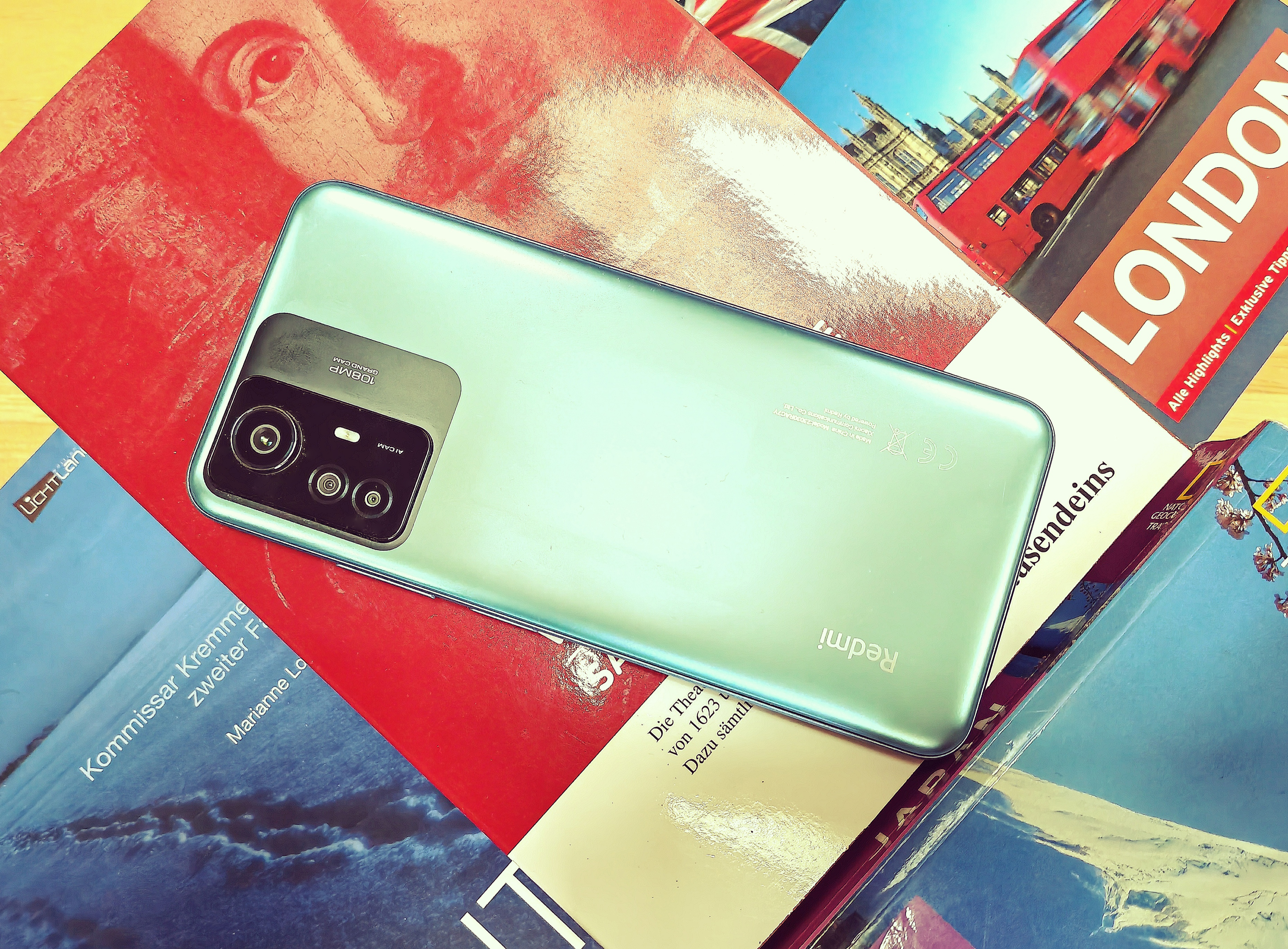
Slim and slender. The Redmi Note 12S is a compact smartphone with its 6.43-inch screen. It offers a lot of storage and a high-resolution main camera, but you won’t find 5G. In our review, we take a look at how well the compact mid-range smartphone scores.
Florian Schmitt, 👁 Florian Schmitt (translated by Jacob Fisher), Published 🇩🇪
Smartphones with screens just under the 7-inch limit are no longer a rarity, but there are certainly people for whom a compact smartphone is more practical. It fits better in the pocket, is easier to use in small hands and is often lighter.
The Redmi Note 12S is Xiaomi’s new and slightly smaller model in its cheap mid-range series. But this doesn’t mean that you have to do without an AMOLED screen and decent storage space.
Display
6.43 inch 20:9, 2400 x 1080 pixel 409 PPI, capacitive touchscreen, AMOLED, glossy: yes, 90 Hz
Storage
256 GB UFS 2.2 Flash, 256 GB
, 235 GB free
Connections
1 USB 2.0, USB-C Power Delivery (PD), 1 Infrared, Audio Connections: 3.5mm, Card Reader: microSD (shared, up to 1TB), 1 Fingerprint Reader, NFC, Sensors: accelerometer, gyro, proximity, compass
Networking
802.11 a/b/g/n/ac (a/b/g/n=Wi-Fi 4/ac=Wi-Fi 5/), Bluetooth 5.2, 2G (850/900/1800/1900), 3G (B1/B5/B8), 4G (B1/B3/B5/B7/B8/B20/B28/B32/B38/B40/B41), Dual SIM, LTE, GPS
Size
height x width x depth (in mm): 8.1 x 159.9 x 73.9 (=0.32 x 6.3 x 2.91 in)
Battery
5000 mAh Lithium-Polymer, 33-watt charging
Charging
fast charging / Quickcharge
Operating System
Android 13
Camera
Primary Camera: 108 MPix f/1.9, phase comparison-AF, LED-flash, Videos @1080p/30fps (Camera 1); 8.0MP, f/2.2, wide angle lens (Camera 2); 2.0MP, f/2.4, macro lens (Camera 3)
Secondary Camera: 16 MPix f/2.4, Videos @1080p/30fps
Additional features
Speakers: hybrid stereo speakers, 24 Months Warranty, FM Radio, fanless
Weight
176 g (= 6.21 oz / 0.39 pounds) (= 0 oz / 0 pounds)
Note: The manufacturer may use components from different suppliers including display panels, drives or memory sticks with similar specifications.
|
Rating |
Date |
Model |
Weight |
Drive |
Size |
Resolution |
Best Price |
|---|---|---|---|---|---|---|---|
| 80.4 % |
08/2023 |
Xiaomi Redmi Note 12S Helio G96, Mali-G57 MP2 |
176 g | 256 GB UFS 2.2 Flash | 6.43″ | 2400×1080 | |
| 78.5 % |
06/2023 |
Honor X8a Helio G88, Mali-G52 MP2 |
179 g | 128 GB eMMC Flash | 6.70″ | 2388×1080 | |
| 81.7 % |
06/2023 |
Xiaomi Redmi Note 12 5G SD 4 Gen 1, Adreno 619 |
189 g | 128 GB UFS 2.2 Flash | 6.67″ | 2400×1080 | |
| 79.1 % |
03/2023 |
Motorola Moto G53 SD 480+, Adreno 619 |
183 g | 128 GB UFS 2.1 Flash | 6.50″ | 1600×720 | |
| 79.4 % |
05/2023 |
Samsung Galaxy A14 5G Dimensity 700, Mali-G57 MP2 |
202 g | 64 GB UFS 2.2 Flash | 6.60″ | 2408×1080 |
The Xiaomi Redmi Note 12S is quite a light smartphone at 176 grams and significantly smaller than the Xiaomi Redmi Note 12 5G, for example. However, the bezels around the screen are clearly visible, so the phone could have been even more compact with some tweaking.
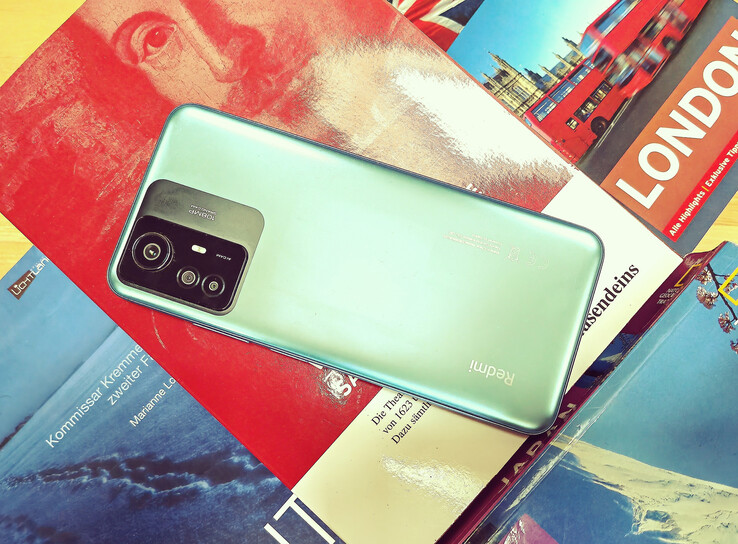
The case is made of plastic; the back shimmers in either Pearl Green, Ice Blue or Onyx Black. The camera module protrudes clearly from the case and stands out due to its dark color. Despite its simple plastic frame, the smartphone is very stable and can hardly be twisted. The back can be dented slightly in some places.
A protection standard has not been specified, so the Redmi Note 12S should not be exposed to dusty environments or submerged in water.
{element.classList.add(‘hideEl’)});document.getElementById(‘showDeviceSizelabel_335717’).checked=false;document.querySelectorAll(‘#showDeviceSize_337663’).forEach(element=> {element.classList.add(‘hideEl’)});document.getElementById(‘showDeviceSizelabel_337663’).checked=false;document.querySelectorAll(‘#showDeviceSize_335409’).forEach(element=> {element.classList.add(‘hideEl’)});document.getElementById(‘showDeviceSizelabel_335409’).checked=false;document.querySelectorAll(‘#showDeviceSize_337357’).forEach(element=> {element.classList.add(‘hideEl’)});document.getElementById(‘showDeviceSizelabel_337357’).checked=false;document.querySelectorAll(‘#showDeviceSize_338854’).forEach(element=> {element.classList.add(‘hideEl’)});document.getElementById(‘showDeviceSizelabel_338854’).checked=false;return false;” title=”hide all”>❌
The Xiaomi Redmi Note 12S comes in two configurations, of which the availability depends on location. The same also applies to price.
- 128 GB mass storage / 6 GB RAM
- 256 GB mass storage / 8 GB RAM
An unusual feature is the FM radio capability. This is handy in the absence of network coverage or if you don’t want to use any mobile data. An infrared port also allows for the linking of remote control devices.
NFC is also on board so that mobile payment services can be used.
The microSD slot is also the smartphone’s second SIM slot, so you have to decide whether you would rather use 2 SIM cards or one SIM and the microSD for more storage.
In testing with our Angelbird V60 reference card, read rates are quite slow. The CPDT benchmark reveals repeated drops in the data rate, so the card reader should only be used for data that is used less often.
Xiaomi Redmi Note 12S Mali-G57 MP2, Helio G96, 256 GB UFS 2.2 Flash; SDCard Sequential Write 0.5 GB; Angelbird V60: Ø34.6 (15.6-48.3)
Xiaomi Redmi Note 12 5G Adreno 619, SD 4 Gen 1, 128 GB UFS 2.2 Flash; SDCard Sequential Write 0.5 GB; Angelbird AV Pro V60: Ø36.3 (4.86-48.5)
Motorola Moto G53 Adreno 619, SD 480+, 128 GB UFS 2.1 Flash; SDCard Sequential Write 0.5 GB: Ø38.9 (28.3-49.6)
Samsung Galaxy A14 5G Mali-G57 MP2, Dimensity 700, 64 GB UFS 2.2 Flash; SDCard Sequential Write 0.5 GB; Angelbird AV Pro V60: Ø37.2 (22.3-48.4)
Xiaomi Redmi Note 12S Mali-G57 MP2, Helio G96, 256 GB UFS 2.2 Flash; SDCard Sequential Read 0.5 GB; Angelbird V60: Ø75.3 (44.9-85.2)
Xiaomi Redmi Note 12 5G Adreno 619, SD 4 Gen 1, 128 GB UFS 2.2 Flash; SDCard Sequential Read 0.5 GB; Angelbird AV Pro V60: Ø61.2 (29.9-79.8)
Motorola Moto G53 Adreno 619, SD 480+, 128 GB UFS 2.1 Flash; SDCard Sequential Read 0.5 GB: Ø76.1 (26.1-84.4)
Samsung Galaxy A14 5G Mali-G57 MP2, Dimensity 700, 64 GB UFS 2.2 Flash; SDCard Sequential Read 0.5 GB; Angelbird AV Pro V60: Ø75.7 (20.1-83.4)
Android 13 is preinstalled on the smartphone. On top of this is in-house MiUI 14, which changes the system significantly and sometimes displays advertising when using system apps. Numerous third-party apps are also preinstalled, which can be simply deleted if desired.
The Xiaomi Redmi Note 12S is not part of the “Android Enterprise Recommended” program, which provides information about update frequency and duration. Hence, it is difficult to obtain information about the expected supply of updates and software for the smartphone.
The Redmi Note 11S predecessor, which started with Android 11, will receive Android 13. Therefore, major version updates are also expected for the Redmi Note 12S 2. The security patches were from July 2023 and thus reasonably up to date at the time of review. In the low price range, Xiaomi usually provides security updates every 3 months.
Thanks to WiFi 5, the Redmi Note 12S achieves data rates of up to 388 Mbit/s with our Asus ROG Rapture AXE11000 reference router. So the smartphone is on the usual level for this price range, but we also observed one or two significant drops in the data rate during testing. These occur at irregular intervals when the test is repeated several times.
The smartphone displays full signal strength close to the router and websites are loaded quite quickly. At a distance of 10 meters and through 3 walls, the signal strength remains unchanged, but pages load noticeably slower.
The Redmi Note 12S is a 4G smartphone. It offers the most necessary frequencies for domestic use, but you’ll have to inquire further whether you can use mobile internet when traveling abroad. During our approximately 2-week review phase, we repeatedly checked the signal and compared it with high-end smartphones in the same network at the same place. The Xiaomi smartphone is on a medium level here and usually cannot keep up the signal strength of more expensive smartphones, but never completely loses reception in an inner-city environment
| Networking | |
| iperf3 receive AXE11000 | |
| Average of class Smartphone (34.8 – 1875, n=183, last 2 years) |
|
| Samsung Galaxy A14 5G Mali-G57 MP2, Dimensity 700, 64 GB UFS 2.2 Flash |
|
| Xiaomi Redmi Note 12 5G Adreno 619, SD 4 Gen 1, 128 GB UFS 2.2 Flash |
|
| Motorola Moto G53 Adreno 619, SD 480+, 128 GB UFS 2.1 Flash |
|
| Honor X8a Mali-G52 MP2, Helio G88, 128 GB eMMC Flash |
|
| Xiaomi Redmi Note 12S Mali-G57 MP2, Helio G96, 256 GB UFS 2.2 Flash |
|
| iperf3 transmit AXE11000 | |
| Average of class Smartphone (40.5 – 1810, n=184, last 2 years) |
|
| Samsung Galaxy A14 5G Mali-G57 MP2, Dimensity 700, 64 GB UFS 2.2 Flash |
|
| Xiaomi Redmi Note 12S Mali-G57 MP2, Helio G96, 256 GB UFS 2.2 Flash |
|
| Honor X8a Mali-G52 MP2, Helio G88, 128 GB eMMC Flash |
|
| Xiaomi Redmi Note 12 5G Adreno 619, SD 4 Gen 1, 128 GB UFS 2.2 Flash |
|
| Motorola Moto G53 Adreno 619, SD 480+, 128 GB UFS 2.1 Flash |
|
The Redmi smartphone works with all major satellite networks for localization. SBAS is also supported for more precise positioning. When we step outdoors, it takes a short while before we are positioned accurately to a good 5 meters.
As for its real-world capabilities, we took the Redmi Note 12 on a bike ride, taking the Garmin Venu 2 smartwatch along for comparison.
The Xiaomi smartphone’s navigation capabilities prove to be limited, even on fairly open terrain. Again and again, we see clear deviations from the route and the loop recorded is clearly too small.
These inaccuracies also persist in the narrow streets of the old town and over the bridge. According to the Redmi Note 12, we passed through houses and hovered over the water. Even in this price range there are smartphones that track the user much more precisely.
Xiaomi uses Google’s standard app for telephony.
The voice quality is loud and clear via the integrated earpiece, so that you can understand the other person well, even in noisy surroundings. The microphone also picks up our voice clearly, but there are small dropouts from time to time.
The sound quality is significantly weaker via the speaker and hands-free mode, so that the person on the other end sounds further away and is harder to understand. But our voice is conveyed in a way that is easy to understand, according to the other party.

The main camera in the Redmi Note 12S has a resolution of 108 megapixels, and Samsung’s Isocell HM2 is used as the sensor. It combines 9 pixels into one large pixel and thus shoots 12-megapixel images with good light sensitivity. Full resolution can only be used in a special mode.
The resulting photos are rather cool in terms of white balance, but this contributes to realistic reproduction. At first glance, the images look sharp, but details become lost when enlarged. The dynamics are satisfactory in daylight, but decrease in weak lighting and show clear weaknesses in both dark and bright areas.
The wide-angle camera has a resolution of 8 megapixels and you can use a hybrid zoom with focal lengths between the two lenses in normal photo mode. The camera takes decent pictures, but you shouldn’t zoom in for detail. The third lens on the back is a low-resolution macro camera that can only be used in a special mode.
On the front is a 16-megapixel Sony camera. It takes solid selfies in good light, but there is little in the way of dynamics, and details look very grainy when zoomed in.
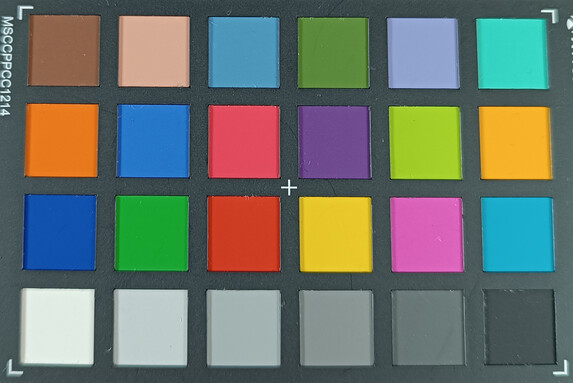
Samsung’s main camera still has to prove itself in the test lab. Here we have a test chart that we photograph in full studio lighting. The sharpness clearly decreases at the edges of the picture, and black text in front of a red background also poses sharpness problems for the camera.
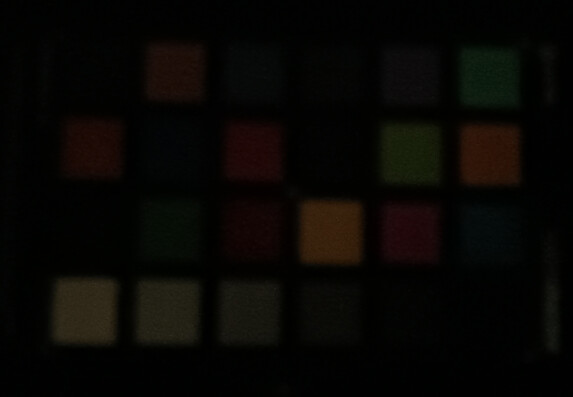
At only 1 lux illuminance, the image is still recognizable, but with very little detail.
8.3 ∆E
5.7 ∆E
13.2 ∆E
13.1 ∆E
12.4 ∆E
7.3 ∆E
4.3 ∆E
13.7 ∆E
6.5 ∆E
7.4 ∆E
5.1 ∆E
4.8 ∆E
9 ∆E
7.3 ∆E
11.2 ∆E
0.8 ∆E
8.5 ∆E
13.7 ∆E
7.2 ∆E
6.5 ∆E
7.2 ∆E
11.4 ∆E
14.9 ∆E
11.9 ∆E
29.6 ∆E
51.6 ∆E
39.3 ∆E
34.8 ∆E
44.7 ∆E
56.7 ∆E
51.3 ∆E
36.1 ∆E
39.2 ∆E
29 ∆E
58.5 ∆E
58.8 ∆E
31.5 ∆E
45.4 ∆E
35.6 ∆E
69.3 ∆E
40.2 ∆E
41.2 ∆E
75.1 ∆E
67.2 ∆E
49.6 ∆E
35.9 ∆E
23.9 ∆E
13.9 ∆E
In addition to the charger and a USB cable, the package also contains a silicone case for the smartphone and a tool for opening the SIM tray. However, you won’t find a wired headset, which is absolutely necessary if you want to use the FM radio since it serves as an antenna replacement.
Xiaomi offers a 24-month warranty on smartphones purchased in the EU (this may differ in regions outside the EU). Another bonus is that the battery and the power adapter are also covered by a full 2-year warranty.
Since the screen can display up to 90 frames per second, operation feels very responsive. The accurate touchscreen also contributes to this and accepts our commands without issue right up to the corners.
The fingerprint sensor is integrated in the standby button on the right. It reacts quickly and reliably to fingerprints that have been registered and unlocks the smartphone with minimal delay. Facial recognition is also available on the Redmi Note 12S. However, this only works with 2D images and is therefore susceptible to manipulation.

An AMOLED screen is rarely found in this price range (just above US$200), but the Xiaomi Redmi Note 12S has one. It has enhanced FullHD resolution and a frame rate of up to 90 Hz.
The brightness is also on a high level, even if we only measured an average of 631 cd/m² and not the 700 cd/m² advertised by Xiaomi. We measured over 900 cd/m² in small areas (APL 18), so the display is also be reasonably suitable for HDR content, even if it is not advertised as such.
Since the black value on AMOLED screens is almost perfect due to the pixels that can be switched off, this makes for strong contrasts and vivid colors on the Xiaomi Redmi Note 12S.
| 638 cd/m² |
626 cd/m² |
624 cd/m² |
||
| 636 cd/m² |
627 cd/m² |
625 cd/m² |
||
| 643 cd/m² |
636 cd/m² |
627 cd/m² |
||
Distribution of brightness
X-Rite i1Pro 2
Maximum: 643 cd/m² (Nits) Average: 631.3 cd/m² Minimum: 2.2 cd/m²
Brightness Distribution: 97 %
Center on Battery: 627 cd/m²
Contrast: ∞:1 (Black: 0 cd/m²)
ΔE Color 1.15 | 0.55-29.43 Ø5.1
ΔE Greyscale 1.4 | 0.57-98 Ø5.4
99.2% sRGB (Calman 2D)
Gamma: 2.284
| Xiaomi Redmi Note 12S AMOLED, 2400×1080, 6.43 |
Honor X8a IPS, 2388×1080, 6.70 |
Xiaomi Redmi Note 12 5G AMOLED, 2400×1080, 6.67 |
Motorola Moto G53 IPS, 1600×720, 6.50 |
Samsung Galaxy A14 5G PLS LCD, 2408×1080, 6.60 |
|
|---|---|---|---|---|---|
| Screen |
-27% |
-11% |
-77% |
-272% |
|
| Brightness middle |
627 |
492 -22% |
658 5% |
587 -6% |
579 -8% |
| Brightness |
631 |
481 -24% |
663 5% |
559 -11% |
543 -14% |
| Brightness Distribution |
97 |
94 -3% |
98 1% |
91 -6% |
87 -10% |
| Black Level * |
0.38 |
0.4 |
0.57 |
||
| Colorchecker dE 2000 * |
1.15 |
1.32 -15% |
1.4 -22% |
2.6 -126% |
7.6 -561% |
| Colorchecker dE 2000 max. * |
2.05 |
3.37 -64% |
2.7 -32% |
5.62 -174% |
12.7 -520% |
| Greyscale dE 2000 * |
1.4 |
1.9 -36% |
1.7 -21% |
3.3 -136% |
8.7 -521% |
| Gamma |
2.284 96% |
2.194 100% |
2.23 99% |
2.463 89% |
2.23 99% |
| CCT |
6347 102% |
6288 103% |
6504 100% |
6288 103% |
9344 70% |
| Contrast |
1295 |
1468 |
1016 |
* … smaller is better
Screen Flickering / PWM (Pulse-Width Modulation)
ℹ
To dim the screen, some notebooks will simply cycle the backlight on and off in rapid succession – a method called Pulse Width Modulation (PWM) . This cycling frequency should ideally be undetectable to the human eye. If said frequency is too low, users with sensitive eyes may experience strain or headaches or even notice the flickering altogether.
| Screen flickering / PWM detected | 355.6 Hz |
 |
|
|
The display backlight flickers at 355.6 Hz (Likely utilizing PWM) . The frequency of 355.6 Hz is relatively high, so most users sensitive to PWM should not notice any flickering. However, there are reports that some users are still sensitive to PWM at 500 Hz and above, so be aware. In comparison: 53 % of all tested devices do not use PWM to dim the display. If PWM was detected, an average of 19003 (minimum: 5 – maximum: 3846000) Hz was measured. |
|||
Series of measurements at a fixed zoom level and different brightness settings
Annoyingly, the screen exhibits clear PWM flickering at 50% brightness and below, which fluctuates between 120 and 356 Hz. Since a DC dimming option is lacking, sensitive individuals are likely to have issues here. So you should definitely test the screen at low brightness before buying.
Color reproduction is very good in the “Standard” profile and deviates only minimally from the reference values.
Display Response Times
ℹ
Display response times show how fast the screen is able to change from one color to the next. Slow response times can lead to afterimages and can cause moving objects to appear blurry (ghosting). Gamers of fast-paced 3D titles should pay special attention to fast response times.
| ↔ Response Time Black to White | ||
|---|---|---|
| 2.1 ms … rise ↗ and fall ↘ combined | ↗ 1.1 ms rise |
 |
| ↘ 1 ms fall | ||
| The screen shows very fast response rates in our tests and should be very well suited for fast-paced gaming. In comparison, all tested devices range from 0.1 (minimum) to 240 (maximum) ms. » 5 % of all devices are better. This means that the measured response time is better than the average of all tested devices (22 ms). |
||
| ↔ Response Time 50% Grey to 80% Grey | ||
| 2.8 ms … rise ↗ and fall ↘ combined | ↗ 1.4 ms rise |
 |
| ↘ 1.4 ms fall | ||
| The screen shows very fast response rates in our tests and should be very well suited for fast-paced gaming. In comparison, all tested devices range from 0.25 (minimum) to 636 (maximum) ms. » 5 % of all devices are better. This means that the measured response time is better than the average of all tested devices (34.7 ms). |
||
Outdoors, the bright display proves to be easy to read, even on bright summer days.
The viewing angles are also very wide from all directions thanks to AMOLED.
MediaTek’s Helio G96 is used as the processor in the Redmi Note 12S. It has a few years under its belt and was already used in the Redmi Note 11S predecessor. Nevertheless, the current Redmi smartphone still proves to be powerful and is able to rank in the midfield among the comparison devices.
In everyday use you’ll have to deal with the fact that the system stutters from time to time, but overall you can work well. You’ll also have to live with slightly longer waiting times when starting more complex apps, but the Helio G96 proves to be sufficient for many tasks overall.
| Geekbench 5.4 | |
| Single-Core | |
| Average of class Smartphone (119 – 1885, n=240, last 2 years) |
|
| Xiaomi Redmi Note 12 5G Qualcomm Snapdragon 4 Gen 1, Adreno 619, 6144 |
|
| Motorola Moto G53 Qualcomm Snapdragon 480 Plus 5G, Adreno 619, 6144 |
|
| Xiaomi Redmi Note 12S Mediatek Helio G96, Mali-G57 MP2, 8192 |
|
| Samsung Galaxy A14 5G MediaTek Dimensity 700, Mali-G57 MP2, 4096 |
|
| Average Mediatek Helio G96 (466 – 530, n=3) |
|
| Honor X8a Mediatek Helio G88, Mali-G52 MP2, 6144 |
|
| Multi-Core | |
| Average of class Smartphone (473 – 5538, n=240, last 2 years) |
|
| Xiaomi Redmi Note 12 5G Qualcomm Snapdragon 4 Gen 1, Adreno 619, 6144 |
|
| Average Mediatek Helio G96 (1688 – 1863, n=3) |
|
| Xiaomi Redmi Note 12S Mediatek Helio G96, Mali-G57 MP2, 8192 |
|
| Samsung Galaxy A14 5G MediaTek Dimensity 700, Mali-G57 MP2, 4096 |
|
| Motorola Moto G53 Qualcomm Snapdragon 480 Plus 5G, Adreno 619, 6144 |
|
| Honor X8a Mediatek Helio G88, Mali-G52 MP2, 6144 |
|
| Geekbench 6.1 | |
| Single-Core | |
| Average of class Smartphone (193 – 2021, n=19, last 2 years) |
|
| Xiaomi Redmi Note 12S Mediatek Helio G96, Mali-G57 MP2, 8192 |
|
| Average Mediatek Helio G96 |
|
| Honor X8a Mediatek Helio G88, Mali-G52 MP2, 6144 |
|
| Multi-Core | |
| Average of class Smartphone (845 – 5496, n=19, last 2 years) |
|
| Xiaomi Redmi Note 12S Mediatek Helio G96, Mali-G57 MP2, 8192 |
|
| Average Mediatek Helio G96 |
|
| Honor X8a Mediatek Helio G88, Mali-G52 MP2, 6144 |
|
| Antutu v9 – Total Score | |
| Average of class Smartphone (102602 – 1322448, n=164, last 2 years) |
|
| Xiaomi Redmi Note 12S Mediatek Helio G96, Mali-G57 MP2, 8192 |
|
| Average Mediatek Helio G96 (297002 – 363022, n=2) |
|
| Motorola Moto G53 Qualcomm Snapdragon 480 Plus 5G, Adreno 619, 6144 |
|
| Samsung Galaxy A14 5G MediaTek Dimensity 700, Mali-G57 MP2, 4096 |
|
| Xiaomi Redmi Note 12 5G Qualcomm Snapdragon 4 Gen 1, Adreno 619, 6144 |
|
| PCMark for Android – Work 3.0 | |
| Average of class Smartphone (4761 – 28378, n=228, last 2 years) |
|
| Motorola Moto G53 Qualcomm Snapdragon 480 Plus 5G, Adreno 619, 6144 |
|
| Average Mediatek Helio G96 (8115 – 9209, n=3) |
|
| Xiaomi Redmi Note 12S Mediatek Helio G96, Mali-G57 MP2, 8192 |
|
| Samsung Galaxy A14 5G MediaTek Dimensity 700, Mali-G57 MP2, 4096 |
|
| Xiaomi Redmi Note 12 5G Qualcomm Snapdragon 4 Gen 1, Adreno 619, 6144 |
|
| Honor X8a Mediatek Helio G88, Mali-G52 MP2, 6144 |
|
| CrossMark – Overall | |
| Average of class Smartphone (200 – 1356, n=144, last 2 years) |
|
| Motorola Moto G53 Qualcomm Snapdragon 480 Plus 5G, Adreno 619, 6144 |
|
| Xiaomi Redmi Note 12 5G Qualcomm Snapdragon 4 Gen 1, Adreno 619, 6144 |
|
| Samsung Galaxy A14 5G MediaTek Dimensity 700, Mali-G57 MP2, 4096 |
|
| Xiaomi Redmi Note 12S Mediatek Helio G96, Mali-G57 MP2, 8192 |
|
| Average Mediatek Helio G96 (440 – 518, n=2) |
|
| BaseMark OS II | |
| Overall | |
| Average of class Smartphone (411 – 9679, n=165, last 2 years) |
|
| Xiaomi Redmi Note 12 5G Qualcomm Snapdragon 4 Gen 1, Adreno 619, 6144 |
|
| Motorola Moto G53 Qualcomm Snapdragon 480 Plus 5G, Adreno 619, 6144 |
|
| Xiaomi Redmi Note 12S Mediatek Helio G96, Mali-G57 MP2, 8192 |
|
| Average Mediatek Helio G96 (2696 – 3072, n=2) |
|
| Samsung Galaxy A14 5G MediaTek Dimensity 700, Mali-G57 MP2, 4096 |
|
| System | |
| Average of class Smartphone (2376 – 19657, n=165, last 2 years) |
|
| Xiaomi Redmi Note 12 5G Qualcomm Snapdragon 4 Gen 1, Adreno 619, 6144 |
|
| Motorola Moto G53 Qualcomm Snapdragon 480 Plus 5G, Adreno 619, 6144 |
|
| Xiaomi Redmi Note 12S Mediatek Helio G96, Mali-G57 MP2, 8192 |
|
| Samsung Galaxy A14 5G MediaTek Dimensity 700, Mali-G57 MP2, 4096 |
|
| Average Mediatek Helio G96 (5016 – 5684, n=2) |
|
| Memory | |
| Average of class Smartphone (670 – 11617, n=165, last 2 years) |
|
| Xiaomi Redmi Note 12S Mediatek Helio G96, Mali-G57 MP2, 8192 |
|
| Xiaomi Redmi Note 12 5G Qualcomm Snapdragon 4 Gen 1, Adreno 619, 6144 |
|
| Samsung Galaxy A14 5G MediaTek Dimensity 700, Mali-G57 MP2, 4096 |
|
| Motorola Moto G53 Qualcomm Snapdragon 480 Plus 5G, Adreno 619, 6144 |
|
| Average Mediatek Helio G96 (3280 – 4282, n=2) |
|
| Graphics | |
| Average of class Smartphone (697 – 30125, n=165, last 2 years) |
|
| Xiaomi Redmi Note 12 5G Qualcomm Snapdragon 4 Gen 1, Adreno 619, 6144 |
|
| Motorola Moto G53 Qualcomm Snapdragon 480 Plus 5G, Adreno 619, 6144 |
|
| Average Mediatek Helio G96 (2666 – 2763, n=2) |
|
| Samsung Galaxy A14 5G MediaTek Dimensity 700, Mali-G57 MP2, 4096 |
|
| Xiaomi Redmi Note 12S Mediatek Helio G96, Mali-G57 MP2, 8192 |
|
| Web | |
| Average of class Smartphone (10 – 2392, n=165, last 2 years) |
|
| Xiaomi Redmi Note 12S Mediatek Helio G96, Mali-G57 MP2, 8192 |
|
| Average Mediatek Helio G96 (1163 – 1372, n=2) |
|
| Motorola Moto G53 Qualcomm Snapdragon 480 Plus 5G, Adreno 619, 6144 |
|
| Xiaomi Redmi Note 12 5G Qualcomm Snapdragon 4 Gen 1, Adreno 619, 6144 |
|
| Samsung Galaxy A14 5G MediaTek Dimensity 700, Mali-G57 MP2, 4096 |
|
| UL Procyon AI Inference – Overall Score | |
| Average of class Smartphone (207 – 84787, n=120, last 2 years) |
|
| Xiaomi Redmi Note 12S Mediatek Helio G96, Mali-G57 MP2, 8192 |
|
| Average Mediatek Helio G96 (9119 – 9380, n=2) |
|
| Samsung Galaxy A14 5G MediaTek Dimensity 700, Mali-G57 MP2, 4096 |
|
| Xiaomi Redmi Note 12 5G Qualcomm Snapdragon 4 Gen 1, Adreno 619, 6144 |
|
| Motorola Moto G53 Qualcomm Snapdragon 480 Plus 5G, Adreno 619, 6144 |
|
| AImark – Score v3.x | |
| Average of class Smartphone (365 – 128240, n=57, last 2 years) |
|
| Samsung Galaxy A14 5G MediaTek Dimensity 700, Mali-G57 MP2, 4096 |
|
| Xiaomi Redmi Note 12S Mediatek Helio G96, Mali-G57 MP2, 8192 |
|
| Average Mediatek Helio G96 |
|
| Motorola Moto G53 Qualcomm Snapdragon 480 Plus 5G, Adreno 619, 6144 |
|
| Xiaomi Redmi Note 12 5G Qualcomm Snapdragon 4 Gen 1, Adreno 619, 6144 |
|
The mobile graphics chip in the Redmi Note 12S cannot render 4K graphics in games smoothly, but neither can any other smartphone in this price range. Even in Full HD graphics, you have to run less complex games for a smooth gaming experience. The Redmi Note 12 5G, for example, is much more powerful here.
| 3DMark / Wild Life Extreme Unlimited | |
| Xiaomi Redmi Note 12S Mali-G57 MP2, Helio G96, 256 GB UFS 2.2 Flash |
|
| Samsung Galaxy A14 5G Mali-G57 MP2, Dimensity 700, 64 GB UFS 2.2 Flash |
|
| Motorola Moto G53 Adreno 619, SD 480+, 128 GB UFS 2.1 Flash |
|
| Honor X8a Mali-G52 MP2, Helio G88, 128 GB eMMC Flash |
|
| Xiaomi Redmi Note 12 5G Adreno 619, SD 4 Gen 1, 128 GB UFS 2.2 Flash |
|
| 3DMark / Wild Life Extreme | |
| Samsung Galaxy A14 5G Mali-G57 MP2, Dimensity 700, 64 GB UFS 2.2 Flash |
|
| Xiaomi Redmi Note 12S Mali-G57 MP2, Helio G96, 256 GB UFS 2.2 Flash |
|
| Motorola Moto G53 Adreno 619, SD 480+, 128 GB UFS 2.1 Flash |
|
| Honor X8a Mali-G52 MP2, Helio G88, 128 GB eMMC Flash |
|
| Xiaomi Redmi Note 12 5G Adreno 619, SD 4 Gen 1, 128 GB UFS 2.2 Flash |
|
| 3DMark / Wild Life Unlimited Score | |
| Samsung Galaxy A14 5G Mali-G57 MP2, Dimensity 700, 64 GB UFS 2.2 Flash |
|
| Xiaomi Redmi Note 12S Mali-G57 MP2, Helio G96, 256 GB UFS 2.2 Flash |
|
| Motorola Moto G53 Adreno 619, SD 480+, 128 GB UFS 2.1 Flash |
|
| Honor X8a Mali-G52 MP2, Helio G88, 128 GB eMMC Flash |
|
| Xiaomi Redmi Note 12 5G Adreno 619, SD 4 Gen 1, 128 GB UFS 2.2 Flash |
|
| 3DMark / Wild Life Score | |
| Samsung Galaxy A14 5G Mali-G57 MP2, Dimensity 700, 64 GB UFS 2.2 Flash |
|
| Xiaomi Redmi Note 12S Mali-G57 MP2, Helio G96, 256 GB UFS 2.2 Flash |
|
| Motorola Moto G53 Adreno 619, SD 480+, 128 GB UFS 2.1 Flash |
|
| Honor X8a Mali-G52 MP2, Helio G88, 128 GB eMMC Flash |
|
| Xiaomi Redmi Note 12 5G Adreno 619, SD 4 Gen 1, 128 GB UFS 2.2 Flash |
|
| 3DMark / Sling Shot Extreme (ES 3.1) Unlimited Physics | |
| Samsung Galaxy A14 5G Mali-G57 MP2, Dimensity 700, 64 GB UFS 2.2 Flash |
|
| Motorola Moto G53 Adreno 619, SD 480+, 128 GB UFS 2.1 Flash |
|
| Xiaomi Redmi Note 12 5G Adreno 619, SD 4 Gen 1, 128 GB UFS 2.2 Flash |
|
| Xiaomi Redmi Note 12S Mali-G57 MP2, Helio G96, 256 GB UFS 2.2 Flash |
|
| Honor X8a Mali-G52 MP2, Helio G88, 128 GB eMMC Flash |
|
| 3DMark / Sling Shot Extreme (ES 3.1) Unlimited Graphics | |
| Xiaomi Redmi Note 12 5G Adreno 619, SD 4 Gen 1, 128 GB UFS 2.2 Flash |
|
| Motorola Moto G53 Adreno 619, SD 480+, 128 GB UFS 2.1 Flash |
|
| Samsung Galaxy A14 5G Mali-G57 MP2, Dimensity 700, 64 GB UFS 2.2 Flash |
|
| Xiaomi Redmi Note 12S Mali-G57 MP2, Helio G96, 256 GB UFS 2.2 Flash |
|
| Honor X8a Mali-G52 MP2, Helio G88, 128 GB eMMC Flash |
|
| 3DMark / Sling Shot Extreme (ES 3.1) Unlimited | |
| Xiaomi Redmi Note 12 5G Adreno 619, SD 4 Gen 1, 128 GB UFS 2.2 Flash |
|
| Motorola Moto G53 Adreno 619, SD 480+, 128 GB UFS 2.1 Flash |
|
| Samsung Galaxy A14 5G Mali-G57 MP2, Dimensity 700, 64 GB UFS 2.2 Flash |
|
| Xiaomi Redmi Note 12S Mali-G57 MP2, Helio G96, 256 GB UFS 2.2 Flash |
|
| Honor X8a Mali-G52 MP2, Helio G88, 128 GB eMMC Flash |
|
| GFXBench (DX / GLBenchmark) 2.7 / T-Rex Onscreen | |
| Motorola Moto G53 Adreno 619, SD 480+, 128 GB UFS 2.1 Flash |
|
| Xiaomi Redmi Note 12 5G Adreno 619, SD 4 Gen 1, 128 GB UFS 2.2 Flash |
|
| Samsung Galaxy A14 5G Mali-G57 MP2, Dimensity 700, 64 GB UFS 2.2 Flash |
|
| Xiaomi Redmi Note 12S Mali-G57 MP2, Helio G96, 256 GB UFS 2.2 Flash |
|
| Honor X8a Mali-G52 MP2, Helio G88, 128 GB eMMC Flash |
|
| GFXBench (DX / GLBenchmark) 2.7 / T-Rex Offscreen | |
| Xiaomi Redmi Note 12 5G Adreno 619, SD 4 Gen 1, 128 GB UFS 2.2 Flash |
|
| Motorola Moto G53 Adreno 619, SD 480+, 128 GB UFS 2.1 Flash |
|
| Samsung Galaxy A14 5G Mali-G57 MP2, Dimensity 700, 64 GB UFS 2.2 Flash |
|
| Xiaomi Redmi Note 12S Mali-G57 MP2, Helio G96, 256 GB UFS 2.2 Flash |
|
| Honor X8a Mali-G52 MP2, Helio G88, 128 GB eMMC Flash |
|
| GFXBench 3.0 / Manhattan Onscreen OGL | |
| Motorola Moto G53 Adreno 619, SD 480+, 128 GB UFS 2.1 Flash |
|
| Xiaomi Redmi Note 12 5G Adreno 619, SD 4 Gen 1, 128 GB UFS 2.2 Flash |
|
| Xiaomi Redmi Note 12S Mali-G57 MP2, Helio G96, 256 GB UFS 2.2 Flash |
|
| Samsung Galaxy A14 5G Mali-G57 MP2, Dimensity 700, 64 GB UFS 2.2 Flash |
|
| Honor X8a Mali-G52 MP2, Helio G88, 128 GB eMMC Flash |
|
| GFXBench 3.0 / 1080p Manhattan Offscreen | |
| Xiaomi Redmi Note 12 5G Adreno 619, SD 4 Gen 1, 128 GB UFS 2.2 Flash |
|
| Motorola Moto G53 Adreno 619, SD 480+, 128 GB UFS 2.1 Flash |
|
| Samsung Galaxy A14 5G Mali-G57 MP2, Dimensity 700, 64 GB UFS 2.2 Flash |
|
| Xiaomi Redmi Note 12S Mali-G57 MP2, Helio G96, 256 GB UFS 2.2 Flash |
|
| Honor X8a Mali-G52 MP2, Helio G88, 128 GB eMMC Flash |
|
| GFXBench 3.1 / Manhattan ES 3.1 Onscreen | |
| Motorola Moto G53 Adreno 619, SD 480+, 128 GB UFS 2.1 Flash |
|
| Xiaomi Redmi Note 12 5G Adreno 619, SD 4 Gen 1, 128 GB UFS 2.2 Flash |
|
| Samsung Galaxy A14 5G Mali-G57 MP2, Dimensity 700, 64 GB UFS 2.2 Flash |
|
| Xiaomi Redmi Note 12S Mali-G57 MP2, Helio G96, 256 GB UFS 2.2 Flash |
|
| Honor X8a Mali-G52 MP2, Helio G88, 128 GB eMMC Flash |
|
| GFXBench 3.1 / Manhattan ES 3.1 Offscreen | |
| Xiaomi Redmi Note 12 5G Adreno 619, SD 4 Gen 1, 128 GB UFS 2.2 Flash |
|
| Motorola Moto G53 Adreno 619, SD 480+, 128 GB UFS 2.1 Flash |
|
| Samsung Galaxy A14 5G Mali-G57 MP2, Dimensity 700, 64 GB UFS 2.2 Flash |
|
| Xiaomi Redmi Note 12S Mali-G57 MP2, Helio G96, 256 GB UFS 2.2 Flash |
|
| Honor X8a Mali-G52 MP2, Helio G88, 128 GB eMMC Flash |
|
| GFXBench / Car Chase Onscreen | |
| Motorola Moto G53 Adreno 619, SD 480+, 128 GB UFS 2.1 Flash |
|
| Xiaomi Redmi Note 12 5G Adreno 619, SD 4 Gen 1, 128 GB UFS 2.2 Flash |
|
| Samsung Galaxy A14 5G Mali-G57 MP2, Dimensity 700, 64 GB UFS 2.2 Flash |
|
| Xiaomi Redmi Note 12S Mali-G57 MP2, Helio G96, 256 GB UFS 2.2 Flash |
|
| Honor X8a Mali-G52 MP2, Helio G88, 128 GB eMMC Flash |
|
| GFXBench / Car Chase Offscreen | |
| Motorola Moto G53 Adreno 619, SD 480+, 128 GB UFS 2.1 Flash |
|
| Xiaomi Redmi Note 12 5G Adreno 619, SD 4 Gen 1, 128 GB UFS 2.2 Flash |
|
| Samsung Galaxy A14 5G Mali-G57 MP2, Dimensity 700, 64 GB UFS 2.2 Flash |
|
| Xiaomi Redmi Note 12S Mali-G57 MP2, Helio G96, 256 GB UFS 2.2 Flash |
|
| Honor X8a Mali-G52 MP2, Helio G88, 128 GB eMMC Flash |
|
| GFXBench / Aztec Ruins High Tier Onscreen | |
| Motorola Moto G53 Adreno 619, SD 480+, 128 GB UFS 2.1 Flash |
|
| Xiaomi Redmi Note 12 5G Adreno 619, SD 4 Gen 1, 128 GB UFS 2.2 Flash |
|
| Xiaomi Redmi Note 12S Mali-G57 MP2, Helio G96, 256 GB UFS 2.2 Flash |
|
| Samsung Galaxy A14 5G Mali-G57 MP2, Dimensity 700, 64 GB UFS 2.2 Flash |
|
| Honor X8a Mali-G52 MP2, Helio G88, 128 GB eMMC Flash |
|
| GFXBench / Aztec Ruins High Tier Offscreen | |
| Motorola Moto G53 Adreno 619, SD 480+, 128 GB UFS 2.1 Flash |
|
| Xiaomi Redmi Note 12 5G Adreno 619, SD 4 Gen 1, 128 GB UFS 2.2 Flash |
|
| Xiaomi Redmi Note 12S Mali-G57 MP2, Helio G96, 256 GB UFS 2.2 Flash |
|
| Samsung Galaxy A14 5G Mali-G57 MP2, Dimensity 700, 64 GB UFS 2.2 Flash |
|
| Honor X8a Mali-G52 MP2, Helio G88, 128 GB eMMC Flash |
|
| GFXBench / Aztec Ruins Normal Tier Onscreen | |
| Motorola Moto G53 Adreno 619, SD 480+, 128 GB UFS 2.1 Flash |
|
| Xiaomi Redmi Note 12 5G Adreno 619, SD 4 Gen 1, 128 GB UFS 2.2 Flash |
|
| Xiaomi Redmi Note 12S Mali-G57 MP2, Helio G96, 256 GB UFS 2.2 Flash |
|
| Samsung Galaxy A14 5G Mali-G57 MP2, Dimensity 700, 64 GB UFS 2.2 Flash |
|
| Honor X8a Mali-G52 MP2, Helio G88, 128 GB eMMC Flash |
|
| GFXBench / Aztec Ruins Normal Tier Offscreen | |
| Xiaomi Redmi Note 12 5G Adreno 619, SD 4 Gen 1, 128 GB UFS 2.2 Flash |
|
| Motorola Moto G53 Adreno 619, SD 480+, 128 GB UFS 2.1 Flash |
|
| Samsung Galaxy A14 5G Mali-G57 MP2, Dimensity 700, 64 GB UFS 2.2 Flash |
|
| Xiaomi Redmi Note 12S Mali-G57 MP2, Helio G96, 256 GB UFS 2.2 Flash |
|
| Honor X8a Mali-G52 MP2, Helio G88, 128 GB eMMC Flash |
|
| GFXBench / 4K Aztec Ruins High Tier Offscreen | |
| Xiaomi Redmi Note 12 5G Adreno 619, SD 4 Gen 1, 128 GB UFS 2.2 Flash |
|
| Motorola Moto G53 Adreno 619, SD 480+, 128 GB UFS 2.1 Flash |
|
| Samsung Galaxy A14 5G Mali-G57 MP2, Dimensity 700, 64 GB UFS 2.2 Flash |
|
| Xiaomi Redmi Note 12S Mali-G57 MP2, Helio G96, 256 GB UFS 2.2 Flash |
|
| Honor X8a Mali-G52 MP2, Helio G88, 128 GB eMMC Flash |
|
For internet surfing, the Redmi Note 12S is not a bad choice for its price range. It is usually faster than comparable smartphones in the browser benchmarks, and websites load reasonably quickly in everyday use. However, you often have to wait a bit for pictures.
| Jetstream 2 – Total Score | |
| Average of class Smartphone (17.3 – 282, n=168, last 2 years) |
|
| Motorola Moto G53 (Chrome 111) |
|
| Xiaomi Redmi Note 12S (Chrome 115) |
|
| Xiaomi Redmi Note 12 5G (Chrome 113.0.5672.76) |
|
| Average Mediatek Helio G96 (42.5 – 62.2, n=2) |
|
| Samsung Galaxy A14 5G (Chrome 112) |
|
| Speedometer 2.0 – Result | |
| Average of class Smartphone (14.4 – 375, n=156, last 2 years) |
|
| Xiaomi Redmi Note 12S (Chrome 115) |
|
| Xiaomi Redmi Note 12 5G (Chrome 113.0.5672.76) |
|
| Motorola Moto G53 (Chrome 111) |
|
| Average Mediatek Helio G96 (34.4 – 52.7, n=2) |
|
| Samsung Galaxy A14 5G (Chrome 112) |
|
| WebXPRT 4 – Overall Score | |
| Average of class Smartphone (25 – 202, n=103, last 2 years) |
|
| Motorola Moto G53 (Chrome 111) |
|
| Xiaomi Redmi Note 12 5G (Chrome 113.0.5672.76) |
|
| Xiaomi Redmi Note 12S (Chrome 115) |
|
| Samsung Galaxy A14 5G (2111) |
|
| Average Mediatek Helio G96 (42 – 58, n=2) |
|
| Octane V2 – Total Score | |
| Average of class Smartphone (4633 – 74261, n=200, last 2 years) |
|
| Motorola Moto G53 (Chrome 111) |
|
| Xiaomi Redmi Note 12S (Chrome 115) |
|
| Xiaomi Redmi Note 12 5G (Chrome 113.0.5672.76) |
|
| Average Mediatek Helio G96 (17394 – 19873, n=2) |
|
| Samsung Galaxy A14 5G (Chrome 112) |
|
| Honor X8a (Chrome 114) |
|
| Mozilla Kraken 1.1 – Total Score | |
| Average Mediatek Helio G96 (2560 – 2773, n=2) |
|
| Xiaomi Redmi Note 12S (Chrome 115) |
|
| Samsung Galaxy A14 5G (Chrome 112) |
|
| Xiaomi Redmi Note 12 5G (Chrome 113.0.5672.76) |
|
| Average of class Smartphone (414 – 9999, n=170, last 2 years) |
|
| Motorola Moto G53 (Chrome 111) |
|
* … smaller is better
The Redmi Note 12S offers quite fast storage in the form of UFS 2.2. Together with a correspondingly fast memory controller, however, this kind of storage can do much more, as the Samsung Galaxy A14 5G shows. Even so, the Redmi Note 12S offers fast data transfers and relatively short loading times for its price range.
| Xiaomi Redmi Note 12S | Honor X8a | Xiaomi Redmi Note 12 5G | Motorola Moto G53 | Samsung Galaxy A14 5G | Average 256 GB UFS 2.2 Flash | Average of class Smartphone | |
|---|---|---|---|---|---|---|---|
| AndroBench 3-5 |
-66% |
-9% |
-28% |
13% |
38% |
50% |
|
| Sequential Read 256KB |
518.7 |
278.1 -46% |
520.09 0% |
474.6 -9% |
849.3 64% |
905 {el.classList.toggle(‘hideEl’);});return false;”>?(514 – 1009, n=12) 74% |
1195 {el.classList.toggle(‘hideEl’);});return false;”>?(215 – 4512, n=234, last 2 years) 130% |
| Sequential Write 256KB |
492.3 |
224.2 -54% |
505.55 3% |
243.87 -50% |
469.83 -5% |
741 {el.classList.toggle(‘hideEl’);});return false;”>?(369 – 913, n=12) 51% |
778 {el.classList.toggle(‘hideEl’);});return false;”>?(57.5 – 3062, n=234, last 2 years) 58% |
| Random Read 4KB |
211.9 |
61.6 -71% |
170.61 -19% |
166.24 -22% |
193.63 -9% |
235 {el.classList.toggle(‘hideEl’);});return false;”>?(193.4 – 291, n=12) 11% |
211 {el.classList.toggle(‘hideEl’);});return false;”>?(22.2 – 543, n=234, last 2 years) 0% |
| Random Write 4KB |
202.6 |
18.7 -91% |
161.26 -20% |
139.83 -31% |
204 1% |
238 {el.classList.toggle(‘hideEl’);});return false;”>?(175.1 – 301, n=12) 17% |
222 {el.classList.toggle(‘hideEl’);});return false;”>?(13 – 572, n=235, last 2 years) 10% |
60 fps in games are rarely achieved with the Redmi Note 12S. Although possible in the fast 2D shooter Armajet, there are occasional frame rate fluctuations here as well.
At very low settings in PUBG Mobile, we see up to 40 fps, otherwise 30 fps is the norm. Frame rates were measured with GameBench.
The controls via touchscreen and position sensor work very well.
At a maximum of 42.2 °C, the smartphone gets very warm under prolonged load, but doesn’t reach critical temperatures and can always be held without issue. Performance also remains quite constant under longer loads. We measured a maximum performance drop of 8% after 20 runs of the same benchmark.
|
|||||||||||||||||||||||||
| Maximum: 42.2 °C=108 F Average: 37.2 °C=99 F |
|||||||||||||||||||||||||
|
|||||||||||||||||||||||||
| Maximum: 42.1 °C=108 F Average: 37.4 °C=99 F |
|||||||||||||||||||||||||
Power Supply (max.) 42.3 °C=108 F | Room Temperature 21.3 °C=70 F | Fluke t3000FC (calibrated), Voltcraft IR-260
(±) The average temperature for the upper side under maximal load is 37.2 °C / 99 F, compared to the average of 32.7 °C / 91 F for the devices in the class Smartphone.
(±) The maximum temperature on the upper side is 42.2 °C / 108 F, compared to the average of 35 °C / 95 F, ranging from 21.9 to 56 °C for the class Smartphone.
(±) The bottom heats up to a maximum of 42.1 °C / 108 F, compared to the average of 33.8 °C / 93 F
(+) In idle usage, the average temperature for the upper side is 25.7 °C / 78 F, compared to the device average of 32.7 °C / 91 F.
| 3DMark | |
| Wild Life Stress Test Stability | |
| Samsung Galaxy A14 5G Mali-G57 MP2, Dimensity 700, 64 GB UFS 2.2 Flash |
|
| Motorola Moto G53 Adreno 619, SD 480+, 128 GB UFS 2.1 Flash |
|
| Xiaomi Redmi Note 12S Mali-G57 MP2, Helio G96, 256 GB UFS 2.2 Flash |
|
| Honor X8a Mali-G52 MP2, Helio G88, 128 GB eMMC Flash |
|
| Xiaomi Redmi Note 12 5G Adreno 619, SD 4 Gen 1, 128 GB UFS 2.2 Flash |
|
| Wild Life Extreme Stress Test | |
| Xiaomi Redmi Note 12S Mali-G57 MP2, Helio G96, 256 GB UFS 2.2 Flash |
|
| Motorola Moto G53 Adreno 619, SD 480+, 128 GB UFS 2.1 Flash |
|
| Samsung Galaxy A14 5G Mali-G57 MP2, Dimensity 700, 64 GB UFS 2.2 Flash |
|
| Honor X8a Mali-G52 MP2, Helio G88, 128 GB eMMC Flash |
|
| Xiaomi Redmi Note 12 5G Adreno 619, SD 4 Gen 1, 128 GB UFS 2.2 Flash |
|
Xiaomi Redmi Note 12S Mali-G57 MP2, Helio G96, 256 GB UFS 2.2 Flash; Wild Life Extreme Stress Test; 1.1.0.2: Ø1.956 (1.948-1.968)
Honor X8a Mali-G52 MP2, Helio G88, 128 GB eMMC Flash; Wild Life Extreme Stress Test; 1.1.0.2: Ø1.011 (0.932-1.14)
Motorola Moto G53 Adreno 619, SD 480+, 128 GB UFS 2.1 Flash; Wild Life Extreme Stress Test; 1.1.0.2: Ø1.755 (1.744-1.766)
Samsung Galaxy A14 5G Mali-G57 MP2, Dimensity 700, 64 GB UFS 2.2 Flash; Wild Life Extreme Stress Test; 1.1.0.2: Ø1.978 (1.957-1.988)
Xiaomi Redmi Note 12S Mali-G57 MP2, Helio G96, 256 GB UFS 2.2 Flash; Wild Life Stress Test Stability; 0.0.0.0: Ø6.91 (6.4-6.98)
Honor X8a Mali-G52 MP2, Helio G88, 128 GB eMMC Flash; Wild Life Stress Test Stability; 0.0.0.0: Ø3.9 (3.73-4.49)
Motorola Moto G53 Adreno 619, SD 480+, 128 GB UFS 2.1 Flash; Wild Life Stress Test Stability; 0.0.0.0: Ø5.87 (5.72-5.9)
Samsung Galaxy A14 5G Mali-G57 MP2, Dimensity 700, 64 GB UFS 2.2 Flash; Wild Life Stress Test Stability: Ø7.2 (7.18-7.21)
The speaker system, consisting of the main speaker on the bottom edge and the earpiece as the second speaker, produces slight stereo effects when you hold the phone sideways and reproduces voices quite clearly. As soon as instruments are added, however, the two speakers seem a little overwhelmed and become imprecise. The sound is also quite high-pitched, but is rarely uncomfortable, even at maximum volume.
Things sound better when using the audio port or Bluetooth for external audio devices. Also great is the fact that Xiaomi provides many codecs for wireless audio transmission, including SBC, AAC, the most important aptX codecs, LDAC and LHDC up to version 5.
Frequency diagram (checkboxes can be checked and unchecked to compare devices)
Xiaomi Redmi Note 12S audio analysis
(±) | speaker loudness is average but good (81.3 dB)
Bass 100 – 315 Hz
(-) | nearly no bass – on average 32.3% lower than median
(±) | linearity of bass is average (11.4% delta to prev. frequency)
Mids 400 – 2000 Hz
(+) | balanced mids – only 4.4% away from median
(+) | mids are linear (5.6% delta to prev. frequency)
Highs 2 – 16 kHz
(±) | higher highs – on average 5.3% higher than median
(+) | highs are linear (6.1% delta to prev. frequency)
Overall 100 – 16.000 Hz
(±) | linearity of overall sound is average (24.2% difference to median)
Compared to same class
» 48% of all tested devices in this class were better, 8% similar, 44% worse
» The best had a delta of 12%, average was 39%, worst was 134%
Compared to all devices tested
» 67% of all tested devices were better, 7% similar, 26% worse
» The best had a delta of 4%, average was 26%, worst was 134%
Samsung Galaxy A14 5G audio analysis
(+) | speakers can play relatively loud (90.4 dB)
Bass 100 – 315 Hz
(-) | nearly no bass – on average 33.8% lower than median
(+) | bass is linear (4% delta to prev. frequency)
Mids 400 – 2000 Hz
(±) | reduced mids – on average 6.1% lower than median
(+) | mids are linear (5.5% delta to prev. frequency)
Highs 2 – 16 kHz
(+) | balanced highs – only 4.1% away from median
(+) | highs are linear (2% delta to prev. frequency)
Overall 100 – 16.000 Hz
(±) | linearity of overall sound is average (19.9% difference to median)
Compared to same class
» 24% of all tested devices in this class were better, 7% similar, 69% worse
» The best had a delta of 12%, average was 39%, worst was 134%
Compared to all devices tested
» 44% of all tested devices were better, 7% similar, 49% worse
» The best had a delta of 4%, average was 26%, worst was 134%
While the Redmi Note 12S hardly requires any energy under low load, it can consume up to 8.6 watts under heavy load.
Once the battery is empty, it can be recharged with up to 33 watts. Fortunately, Xiaomi provides fast charging technology in the low price segment, meaning that the Redmi Note 12S is recharged in 1:45 hours when the battery is completely empty.
| Xiaomi Redmi Note 12S 5000 mAh |
Xiaomi Redmi Note 12 5G 5000 mAh |
Motorola Moto G53 5000 mAh |
Samsung Galaxy A14 5G 5000 mAh |
Average Mediatek Helio G96 |
Average of class Smartphone |
|
|---|---|---|---|---|---|---|
| Power Consumption |
0% |
4% |
0% |
2% |
4% |
|
| Idle Minimum * |
1 |
0.99 1% |
0.8 20% |
0.64 36% |
0.945 {el.classList.toggle(‘hideEl’);});return false;”>?(0.89 – 1, n=2) 5% |
0.883 {el.classList.toggle(‘hideEl’);});return false;”>?(0.12 – 2.37, n=173, last 2 years) 12% |
| Idle Average * |
1.3 |
1.98 -52% |
1.5 -15% |
2.1 -62% |
1.585 {el.classList.toggle(‘hideEl’);});return false;”>?(1.3 – 1.87, n=2) -22% |
1.493 {el.classList.toggle(‘hideEl’);});return false;”>?(0.69 – 4.26, n=173, last 2 years) -15% |
| Idle Maximum * |
1.5 |
2.02 -35% |
2 -33% |
2.17 -45% |
1.7 {el.classList.toggle(‘hideEl’);});return false;”>?(1.5 – 1.9, n=2) -13% |
1.7 {el.classList.toggle(‘hideEl’);});return false;”>?(0.78 – 4.45, n=173, last 2 years) -13% |
| Load Average * |
5.8 |
3.35 42% |
4.6 21% |
3.73 36% |
4.41 {el.classList.toggle(‘hideEl’);});return false;”>?(3.01 – 5.8, n=2) 24% |
4.49 {el.classList.toggle(‘hideEl’);});return false;”>?(2.1 – 10.1, n=173, last 2 years) 23% |
| Load Maximum * |
8.6 |
4.72 45% |
6.3 27% |
5.44 37% |
7.43 {el.classList.toggle(‘hideEl’);});return false;”>?(6.26 – 8.6, n=2) 14% |
7.36 {el.classList.toggle(‘hideEl’);});return false;”>?(3.56 – 13.7, n=173, last 2 years) 14% |
* … smaller is better
We also tested the battery life in everyday use via various battery tests. The most important is our WLAN test, which simulates daily internet use. The smartphone lasts almost 16 hours and thus delivers a good result for the price segment. It lands in the midfield among similarly priced phones.
Almost 6 hours under load is also a good value in view of the possible high consumption rates, so the energy saving functions appear to do their job well.
Battery Runtime
| Idle (without WLAN, min brightness) | 29h 56min | |
| WiFi Websurfing | 15h 53min | |
| Big Buck Bunny H.264 1080p | 17h 22min | |
| Load (maximum brightness) | 5h 56min |
Pros
+ sturdy case
+ compact and light
+ bright AMOLED screen
+ long battery life
+ fast charging technology
+ lots of storage
Cons
– PWM flickering
– inaccurate localization
– system bogged with ads
– no 5G

Those looking for a somewhat compact smartphone with long runtimes and a great screen should have the Xiaomi Redmi Note 12S on their radar.
The case isn’t very spectacular, the software ads are occasionally annoying and the speaker system is average. But the smartphone does offer good storage capacity, decent photo quality, flexible app options and fast charging.
In terms of performance, the smartphone is on par with its class, but you have to put up with occasional lag despite the fast storage. The AMOLED screen’s lack of DC dimming may be a dealbreaker for sensitive users, as it flickers strongly at low brightness.
The Xiaomi Redmi Note 12S ranks as compact smartphone with lots of storage and a bright AMOLED screen.
Users who do not want to do without 5G and for whom the phone’s size is not the most important criterion can also get the Xiaomi Redmi Note 12 5G. The Samsung Galaxy A14 5G is also compact, but you have to make do with much less storage space.
At Amazon USA, buyers can purchase a 256 GB variant of the Xiaomi Redmi Note 12S in Ice Blue ($219.50), Onyx Black ($217.00) or Pearl Green ($214.00).
Prices are as of 08.08.2023 and are subject to change.
Xiaomi Redmi Note 12S
–
08/07/2023 v7
Florian Schmitt
Connectivity
46 / 70 → 66%
Games Performance
24 / 64 → 38%
Application Performance
69 / 86 → 81%
Smartphone – Weighted Average
Transparency
The present review sample was made available to the author as a loan by the manufacturer or a shop for the purposes of review. The lender had no influence on this review, nor did the manufacturer receive a copy of this review before publication. There was no obligation to publish this review.
Pricecompare

Editor of the original article: Florian Schmitt – Managing Editor Mobile – 1057 articles published on Notebookcheck since 2009
I initially wrote about gaming laptops when I joined Notebookcheck in 2009. I was then involved with the setup of the comparison portal Notebookinfo and worked with social media concepts for large companies like BMW and Adidas, while also returning to work for Notebookcheck in 2012. Nowadays, I focus on smartphones, tablets, and future technologies. Since 2018 I have been Managing Editor for mobile device reviews, working alongside my colleague Daniel Schmidt.

Translator: Jacob Fisher – Translator – 242 articles published on Notebookcheck since 2022
Growing up in regional Australia, I first became acquainted with computers in my early teens after a broken leg from a football (soccer) match temporarily condemned me to a predominately indoor lifestyle. Soon afterwards I was building my own systems. Now I live in Germany, having moved here in 2014, where I study philosophy and anthropology. I am particularly fascinated by how computer technology has fundamentally and dramatically reshaped human culture, and how it continues to do so.
Florian Schmitt, 2023-08- 8 (Update: 2023-08- 8)