

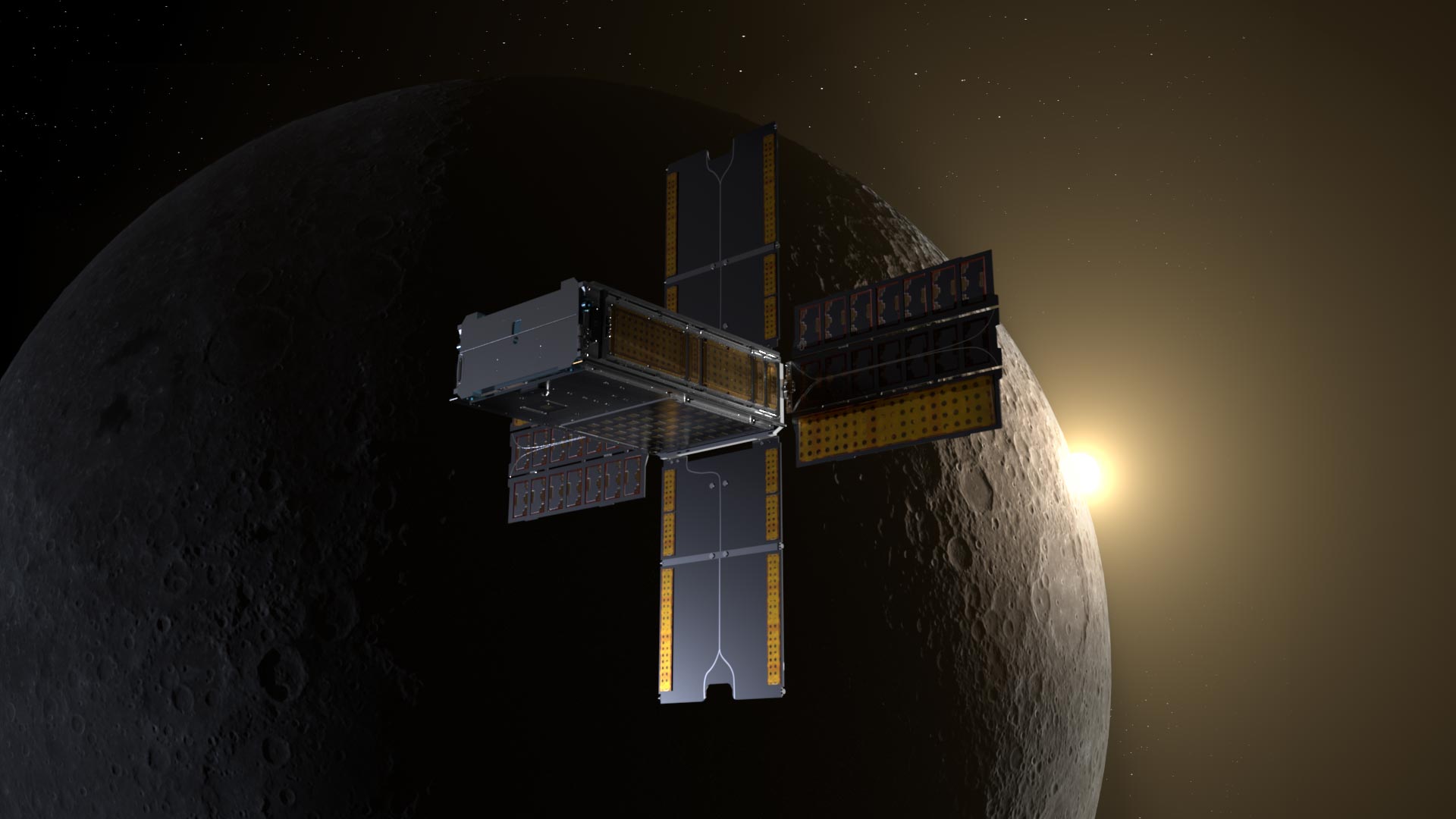
Illustration of BioSentinel’s spacecraft flying past the Moon. Credit: NASA/Daniel Rutter
BioSentinel – a shoebox-sized CubeSat designed to learn what happens to life in deep space – is traveling far from Earth. But that also means it’s closer than ever to being the first long-duration biology experiment in deep space. BioSentinel’s mission operations team successfully acquired signal from the spacecraft shortly after launch on November 16, 2022, and it is currently operating as expected.
BioSentinel was one of the 10 CubeSats that launched aboard Artemis I and subsequently deployed into deep space. It will study the impacts of space radiation on yeast farther in deep space than ever before. Artemis missions at the Moon will prepare humans to travel on increasingly farther and longer-duration missions to destinations like
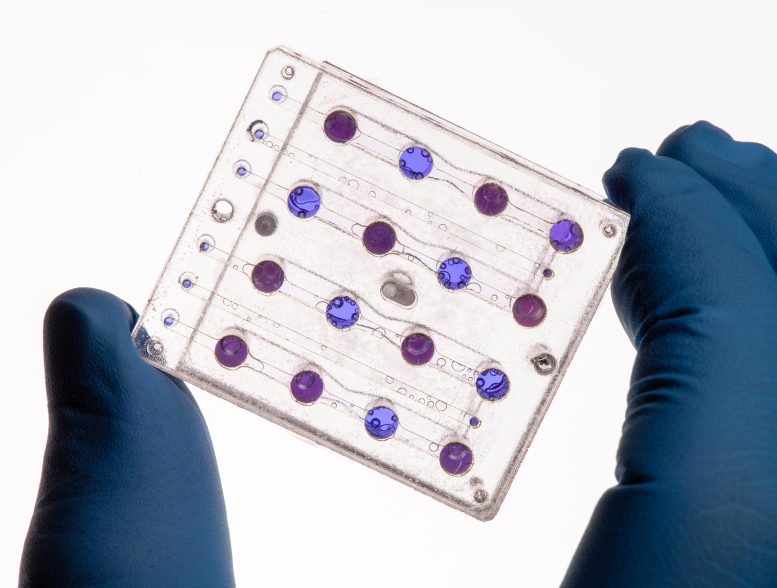
BioSentinel’s microfluidics card, designed at NASA’s Ames Research Center in Silicon Valley, California, will be used to study the impact of interplanetary space radiation on yeast. Once in orbit, the growth and metabolic activity of the yeast will be measured using a three-color LED detection system and a dye that provides a readout of yeast cell activity. Here, pink wells contain actively growing yeast cells that have turned the dye from blue to pink color. Credit: NASA/Dominic Hart