


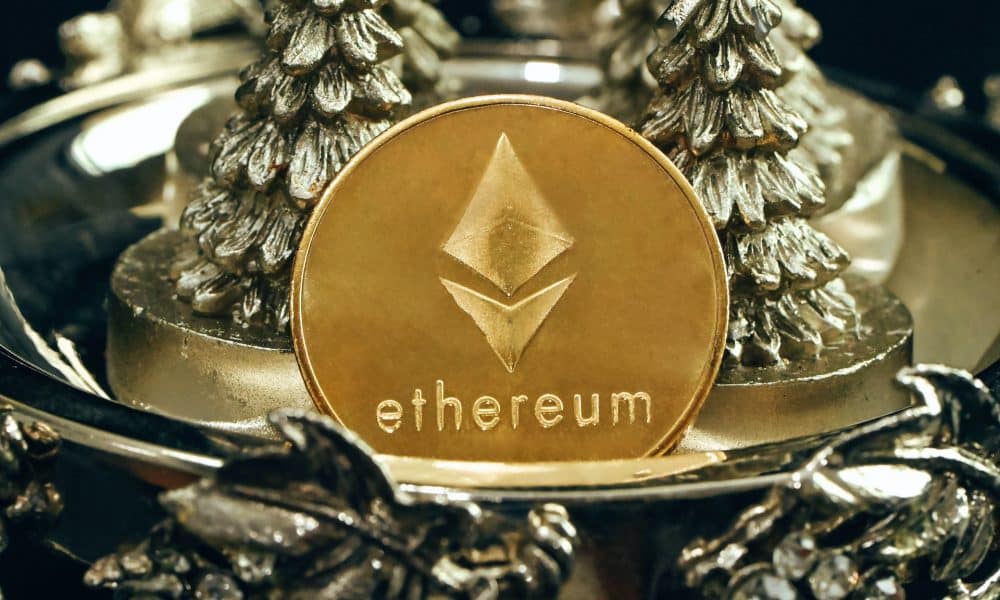
Ethereum is an open-source software platform that harnesses the power of blockchain technology. At its core, it is a decentralized blockchain that accommodates Smart Contract functionality. Currently, Ethereum uses the Proof-of-Work consensus protocol and is in the process of making a transition toward the Proof-of-Stake protocol.
Today, it’s the blockchain of choice for most developers and enterprises because its infrastructure has attracted global attention.
It enables the programmability of Smart Contracts and ultimately serves as a backbone for a host of decentralized apps (dApps), especially in the DeFi space.
The founders of Ethereum were among the first to regard the full potential of blockchain technology beyond its use cases in enabling a peer-peer payment mechanism.
What’s Ether (ETH)?
ETH essentially lets you be your bank. Herein, you can control the funds in your wallet without the intervention of any third party.
Apart from being globally digitized, ETH is the native token of the Ethereum Blockchain which makes it the currency for all Ethereum apps. Thus, ETH is used to pay gas (transaction) fees to use the Ethereum network.
Soon, ETH could become even more important when we consider staking. When you stake your ETH, you’ll be able to help secure Ethereum and earn rewards in return.
What’s more? You can use ETH as collateral to yield different crypto tokens on Ethereum. Also, you can borrow, lend and earn interest on ETH and other ETH-backed tokens.
One should consider that with increasing programmability, ETH could see multiple use cases in the coming times.
Since its ATH in November last year, ETH marked substantial bear runs, one of which occurred as a result of the macroeconomic turmoil over the last few months.
Ethereum, at press time, was trading at $1,551.7, down by nearly 63% [YTD]. While maintaining its market dominance above 19%, ETH showed signs of accumulation in the $1,500 zone.
The buyers have upheld the $1,060 support region that could now act as a reliable rebounding ground and set forth a threshold for renewing buying pressure.
Although this year has not been so good for the largest altcoin, expectations are still high in investors’ minds.
What’s with the Merge?
This anticipation stems from the network’s ongoing efforts to switch from a Proof-of-Work (PoW) to a Proof-of-Stake (PoS) mechanism. The bulls could now aim to capitalize on ‘the Merge’ which is expected to occur in September this year.
Decoding the potential effects of the Merge on Ethereum’s price would be monumental to making an informed forecast of ETH’s price potential in the coming months.
In fact, the Merge is the first step in a series of major Ethereum ecosystem upgrades, which also include The Surge, The Verge, The Purge, and The Splurge.
The goal of these upgrades is to make Ethereum more scalable and energy efficient. The Merge will combine the Ethereum Mainnet with the Proof of Stake Beacon Chain.
The network’s transition from PoW to PoS entails multiple second-order effects on the functionality and potential growth of the platform.
- Impact of Scaling/lesser transaction fees on ETH’s price
While the ‘proto-danksharding’ could go live after several months of The Merge, the investors may not see immediate changes in the scaling’s effect on ETH’s price.
In the meantime, Ethereum is developing a Layer 2 ecosystem that will deal with scalability and fee mitigation until sharding comes to fruition in the coming times. Effective implementation of this could definitely cause a spike in prices.
- Decreased energy consumption
The shift toward PoSis expected to reduce the network’s energy consumption by 99.95%. This development would keep Ethereum away from the heat received from regulatory authorities and ultimately improve its image in the investors’ minds.
- Tokenomics
While Ethereum is on the brink of the Merge, it could witness a phenomenon known as ‘triple halving’.
‘Halving’ is a feature that is prominently built into Bitcoin’s software for ensuring its monetary value over time by periodically reducing the rate of inflation. Historically, Bitcoin halving events have corresponded directly with the start of crypto bull runs.
When the Merge takes place, Ethereum will transition from a miner-secured network to a validator-secured one. In doing so, Ethereum’s inflation is expected to drop from nearly 4.13% to 0.49%. Furthermore, the total new ETH issuance is expected to drop by 90%.
All in all, the reduced supply of ETH will create a deflationary property that could help ETH become a better store of value in the coming months.
Finally, as per the latestCoinshares reportEthereum’s Month-to-Date inflows saw an uptick by $18 million. These inflows highlighted an increased institutional interest in anticipation of the Merge since the past month.
With the successful merge of Ethereum’s Testnets recently, more money could start pouring in to fuel a potential bull run.
Are there a few red flags to loom out for though? A plausible increase in the interest rates by the Federal Reserve could only provoke a slowdown of the stocks and crypto assets. This could impact Bitcoin and Ethereum’s price negatively by delaying the immediate prospects of a bull run.
To top this off, although the claim that OFAC regulations could lead to censorship may be far-fetched, they surely have created an intense debate amongst the community.