


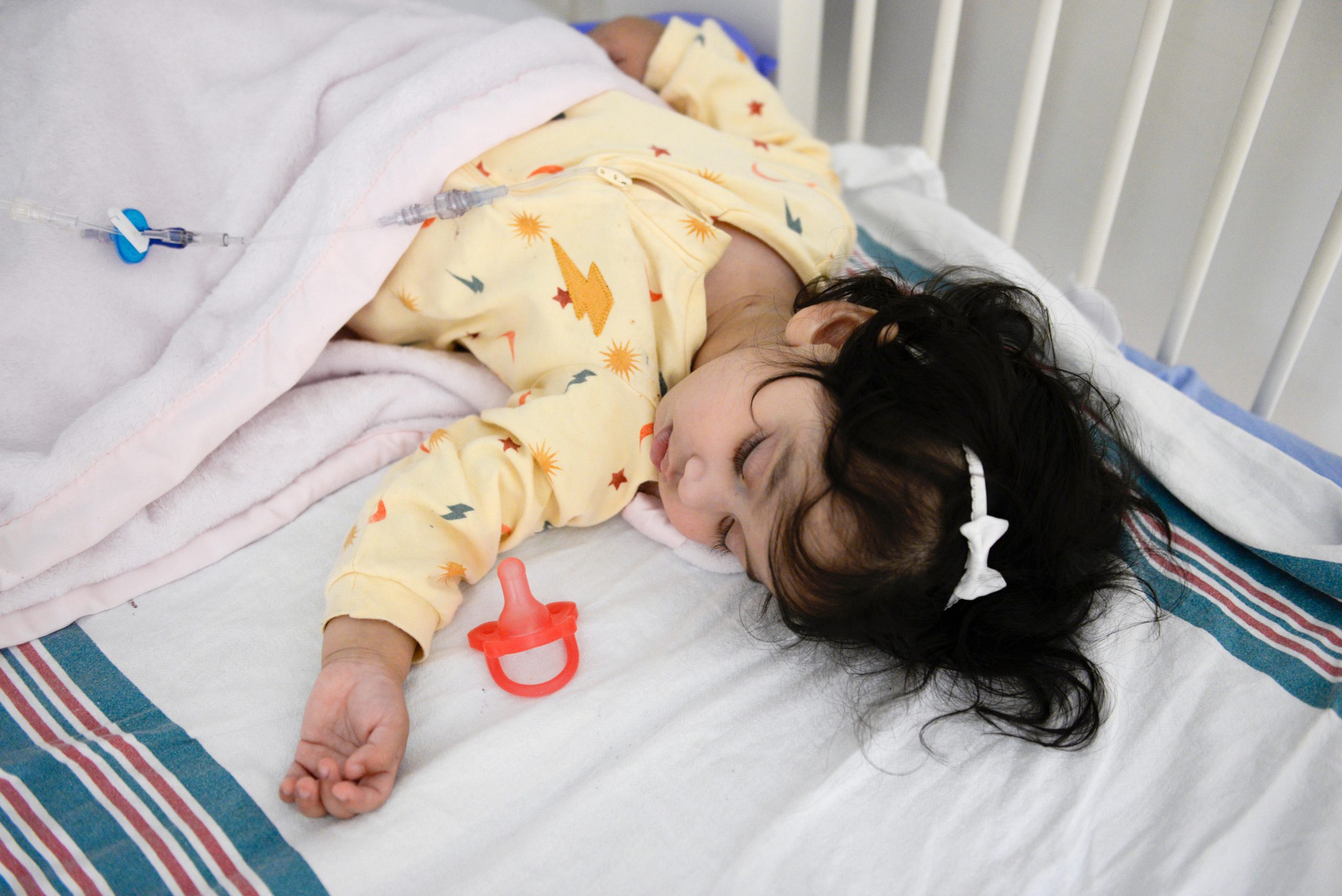
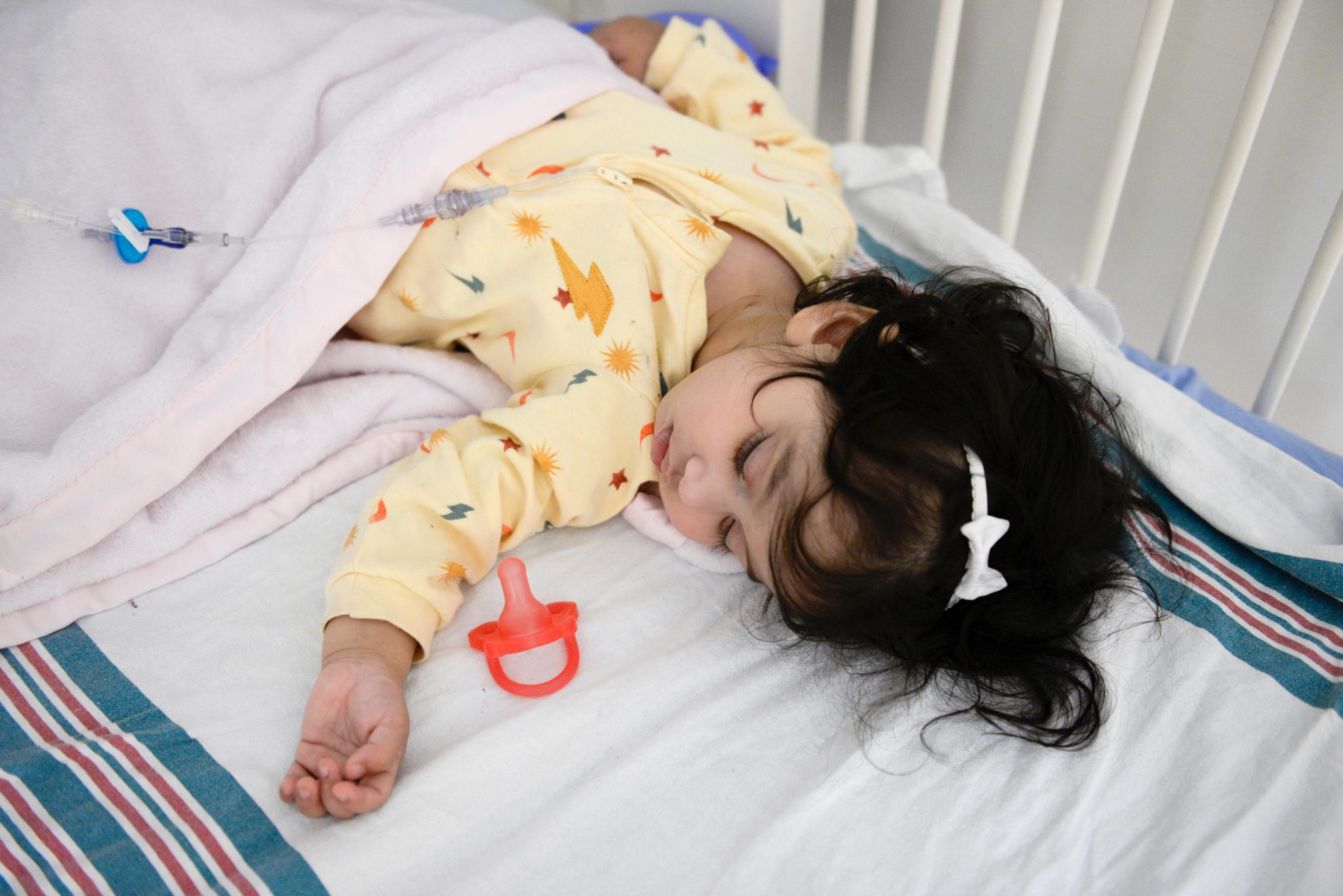
A picture of the patient, Ayla. Credit: University of California – San Francisco
The toddler is thriving after the loss of their siblings who had the same disorder.
For the first time ever, physicians have successfully treated a fetus with a devastating genetic disorder using a protocol developed at the University of California, San Francisco (UCSF). The child, who is now a thriving toddler, was featured in a case study published in the New England Journal of Medicine.
“This treatment expands the repertoire of fetal therapies in a new direction,” said co-senior and corresponding author Tippi MacKenzie, MD, a pediatric surgeon at UCSF Benioff Children’s Hospitals, co-director of UCSF’s Center for Maternal-Fetal Precision Medicine and director of the Eli and Edythe Broad Center of Regeneration Medicine and Stem Cell Research. “As new treatments become available for children with genetic conditions, we are developing protocols to apply them before birth.”
The child in the case study was diagnosed with infantile-onset Pompe disease, a lysosomal storage disorder that can cause severe damage to major organs such as the heart before birth. To improve outcomes for the child, physicians at UC San Francisco initiated enzyme replacement therapy during fetal development, rather than waiting until after birth. Without treatment, infantile-onset Pompe disease can lead to death in early childhood, low muscle tone, or ventilator dependency.
After six prenatal enzyme replacement treatments at The Ottawa Hospital, the child, Ayla, was born at term. She is receiving postnatal enzyme therapy at CHEO (a pediatric hospital and research center in Ottawa, Canada), and doing well at 16 months of age. She has normal cardiac and motor function and is meeting developmental milestones.
“When we were having Ayla, we didn’t know if she’d be able to walk,” said Zahid Bashir, Ayla’s dad. “We didn’t know if she’d be able to talk. We didn’t know if she’d be able to eat. We didn’t know if she’d be able to laugh. So, as she hits each of these milestones, we continue to be amazed at her progress. So, yeah, it’s quite something, that I think sometimes we may take for granted, but most of the time we’re quite aware that she’s a miracle.”
A triumph of collaboration
The successful treatment is a feat of collaboration between UCSF, where an ongoing clinical trial on the treatment is based; CHEO and The Ottawa Hospital, where the patient was diagnosed and treated; and Duke Universityhome to the world’s top experts on Pompe disease.
“We really needed this multidisciplinary group of people to lend their deep expertise to all aspects of care,” said MacKenzie, who holds a Benioff UCSF Professorship in Children’s Health and a John G. Bowes Distinguished Professorship in Stem Cell and Tissue Biology. “Enzyme replacement therapy is a new frontier in the field of fetal therapy; it has been exciting to see it grow from a research project in my laboratory to impact the outcome for this family ultimately. UCSF is considered the birthplace of fetal surgery, and it is a special privilege for us to continue to expand the technologies and treatments available to help families facing a difficult diagnosis during pregnancy.”
Under usual circumstances, the patient’s family would have traveled to the UCSF Benioff Children’s Hospital Fetal Treatment Center to participate in the clinical trial. When DOI: 10.1056/NEJMoa2200587