

/cdn.vox-cdn.com/uploads/chorus_asset/file/23983525/1414504112.jpg "Gavin Newsom signs California social media overhaul for minors")
/
It affects sites ‘likely’ to be visited by minors
|
%2Fcdn.vox-cdn.com%2Fuploads%2Fchorus_asset%2Ffile%2F23983525%2F1414504112.jpg&w=2400&q=75)
Photo by Justin Sullivan/Getty Images
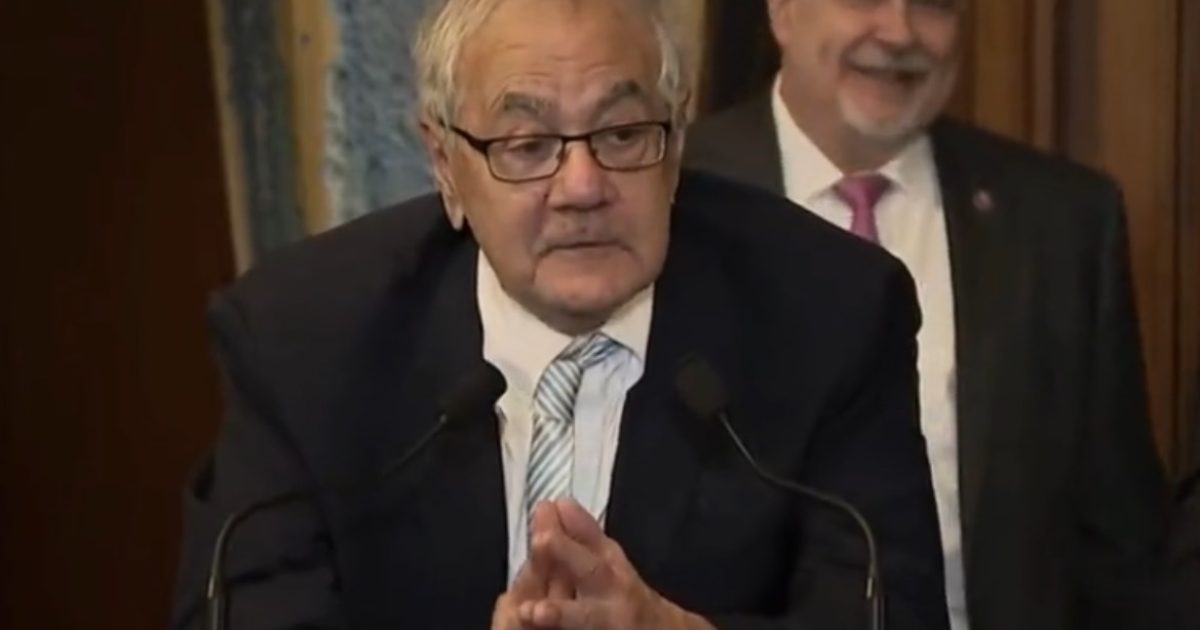
California Governor Gavin Newsom has signed the California Age-Appropriate Design Code Act, a law mandating additional safeguards for minors on social media. The bill, AB 2273, passed the state legislature in August, and it’s slated to go into effect on July 1st, 2024.
AB 2273’s supporters pitched it as a supplement to federal online child protection laws, which apply to children under 13. The law raises the age bar to 18, and it covers web services “likely” to get underage visitors, not just those aimed at kids. These sites must assess the potential harms for children on their platform, limit data collection and sharing for these users, and attempt to estimate the age of children on the platform. A press release from Newsom’s office describes it as making sites “consider the best interest of child users and to default to privacy and safety settings that protect children’s mental and physical health and wellbeing.”
In a worst-case scenario, online anonymity could end up on the chopping block
But critics have pointed out numerous red flags, particularly the bill’s vague terms and broad scope. Sites, particularly smaller ones, could have trouble interpreting and complying with the guidelines. And in an effort to avoid liability, some might turn to invasive age-verification protocols, which would compromise anonymity for adult users as well as children. A state committee is supposed to deliver a report with more details in January 2024, theoretically offering more concrete best practices.
The signing follows Newsom similarly approving AB 587, a less sweeping rule requiring sites to post moderation guidelines online.
Both laws might face challenges in court. NetChoice, which has successfully fought social media laws to a standstill in Texas and Florida, issued a statement opposing Newsom’s decision today. “Although AB 2273’s motive is well-meaning, many of its chosen means are unconstitutional and risk unintended consequences,” said NetChoice counsel Chris Marchese. “The law violates the First Amendment by chilling constitutionally protected speech and by infringing on the editorial rights of websites, platforms, and apps of all sizes and ideologies.” But so far, no lawsuit has materialized — and if it doesn’t, site operators will need to start preparing to childproof their platforms.
Hear me out: global eSIM domination should look like Windows browser choice.
After hunting for a data plan in Australia this week, I’m excited by Apple’s move to drop the physical SIM tray from the iPhone — it could put pressure on global eSIM adoption. But eSIMs are still pretty clunky since you still need to scan a QR code or download a carrier app to activate them. Data is the most important thing on any phone, so shouldn’t it be the easiest thing to shop for? I hope someday clicking “Add Cellular Plan” on the iPhone brings you to a menu of carrier plans that are rated by speed and price.

Nilay Patel56 minutes ago
Amazon is only streaming Thursday Night Football in 1080p, sigh.
This is Amazon’s first season exclusively streaming TNF for Prime subscribers, and I had really been hoping the company would spend the extra money to do it in 4K. Alas, an unnamed spox tells TV Answer Man it’s 1080p, although Sports Video Group has a deep dive on the production truck that says it’s 4K ready. Apple’s MLB games are in 1080p, too. What do we have to do for sports in 4K, people?
LG may be figuring out 6G.
LG successfully sent a Terahertz signal, which could be the basis for 6G communications, over a 1,000-foot distance outdoors. Last year, it was only able to get the signal to go around 330 feet.
Obviously, this tech is a long way off — it’ll be a few years before there are even discussions about 6G standards, and most of us probably won’t be using it until at least 2030.
Instagram vs. TikTok in VR.
Meta’s Quest Pro won’t be officially unveiled for another month — unless they leave a few units laying around in a hotel hallway, again. Now Protocol reports Pico (which, like TikTok, is now owned by Chinese tech giant ByteDance) will launch its next VR headset on September 22nd.
Pico’s new headset may share some features with the Quest Pro, like full-color passthrough video for AR, and a better display.
Twitter, but with an edit button.
Twitter really is almost ready to offer users the long-awaited edit button, and already confirmed that after a little more internal testing, some Twitter Blue subscribers will get access later this month.
Per Platformer author and Verge contributing editor Casey Newton, those public tests are planned to start next week, on September 21st.
Oh and here’s a tiny scoop: Twitter is planning to begin the public test of editing tweets on Wednesday 9/21, per internal documents shared with me
— Casey Newton (@CaseyNewton) September 15, 2022
We love that tattoos hurt, but hear me out: what if they didn’t.
I’m a fan of these cute semi-permanent tattoos created with stickers covered in tiny needles! They seem promising for people who need skin markers for medical procedures. I’m an even bigger fan of an article explaining this while driving home at every possible opportunity how totally cool pain is during a recreational inking experience. It’s a delicate balancing act, and as someone with a freshly healing tattoo, I appreciate it.
YouTube Shorts are driving more than half of the top 50 channels on the platform.
I love TubeFilter’s weekly breakdown of the top 50 most viewed YouTube channels — especially lately, because I keep looking at the percentage of channels that are primarily active on TikTok-clone Shorts. This week, 29 of the top 50 channels worldwide are primarily using Shorts, and a staggering 33 of the top 50 in the US.
The FCC is trying to clean up space junk.
The agency is floating a plan to have low-earth-orbit satellites (like Starlink) get de-orbited within five years of mission completion, instead of 25 years as the rule stands now.
Google’s failed smart city project was just the tip of the iceberg.
Curbed’s Alissa Walker has a great interview with Globe and Mail reporter Josh O’Kane, who’s new book Sideways: The City Google Couldn’t Buy is the definitive account of the failed effort by Sidewalk Labs to build “a city from the internet up.” It’s also an interesting look into the rise and fall of the smart city movement in the 2010s, which presumed that residents would willingly share their own personal data in exchange for city services.
Fuel price protests disrupt internet access in Haiti.
Roads have been blocked across the capital Port-Au-Prince, preventing engineers from fixing damaged cables.
⚠️ Update: Internet access in #Haiti remains significantly disrupted amid fuel price protests with national connectivity at 34% of ordinary levels; operators have identified at least seven optical fiber cuts affecting service this week with repairs made difficult by barricades ? pic.twitter.com/Uz8G8TqxBN
— NetBlocks (@netblocks) September 15, 2022
You can remotely rev the 2024 Ford Mustang’s V-8 engine with a key fob.
I’ll take the L on this: back when Ford first filed the patent on a new technology that would allow vehicle owners to rev their engines remotely by using a key fob, I predicted we wouldn’t see it in a production car anytime soon. How wrong I was! “Remote Rev” is coming to the seventh generation pony car next year. Why would anyone want to do this, you might ask? TBD!