

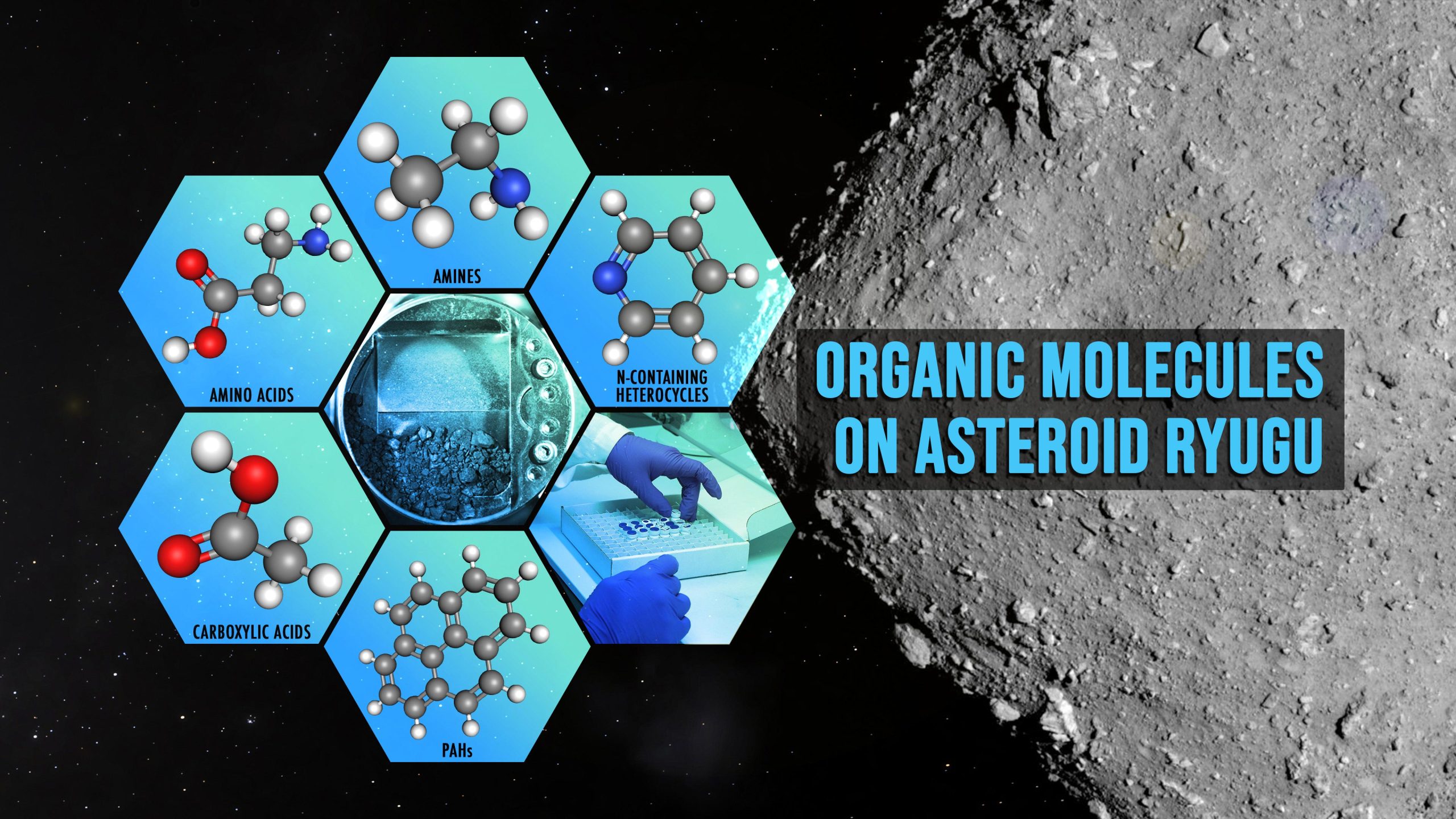
This conceptual image illustrates the types of organic molecules found in the sample of asteroid Ryugu collected by Japan’s Hayabusa2 spacecraft. Organics are the building blocks of all known forms of terrestrial life and consist of a wide variety of compounds made of carbon combined with hydrogen, oxygen, nitrogen, sulfur, and other atoms. However, organic molecules can also be created by non-living processes, such as chemical reactions in asteroids. Credit: NASA/JAXA/Dan Gallagher
Asteroid Ryugu has a rich complement of organic molecules, according to a delivered to Earth by Japan’s Hayabusa2 spacecraft. The discovery adds support to the idea that organic material from space contributed to the inventory of chemical components necessary for life.
Organic molecules are the building blocks of all known forms of terrestrial life and consist of a wide variety of compounds made of carbon combined with hydrogen, oxygen, nitrogen, sulfur, and other atoms. However, organic molecules can also be made by chemical reactions that don’t involve life, supporting the hypothesis that chemical reactions in asteroids can make some of life’s ingredients.
NASA scientist Heather Graham receives a shipment of asteroid Ryugu samples from her colleagues at the Japan Aerospace Exploration Agency (
” data-gt-translate-attributes=”[{[{“attribute”:”data-cmtooltip”, “format”:”html”}]”>amino acids. Certain amino acids are widely used by terrestrial life as a component to build proteins. Proteins are essential to life as they are used to make enzymes which speed up or regulate chemical reactions and to make structures from microscopic to large such as hair and muscles. The sample also contained many types of organics that form in the presence of liquid water, including aliphatic amines, carboxylic acids, polycyclic aromatic hydrocarbons, and nitrogen-containing heterocyclic compounds.
“The presence of prebiotic molecules on the asteroid surface despite its harsh environment caused by solar heating and ultraviolet irradiation, as well as cosmic-ray irradiation under high-vacuum conditions, suggests that the uppermost surface grains of Ryugu have the potential to protect organic molecules,” said Hiroshi Naraoka of Kyushu University, Fukuoka, Japan. “These molecules can be transported throughout the solar system, potentially dispersing as interplanetary dust particles after being ejected from the uppermost layer of the asteroid by impacts or other causes.” Naraoka is lead author of a paper about this research published online on February 24 in the journal Science.
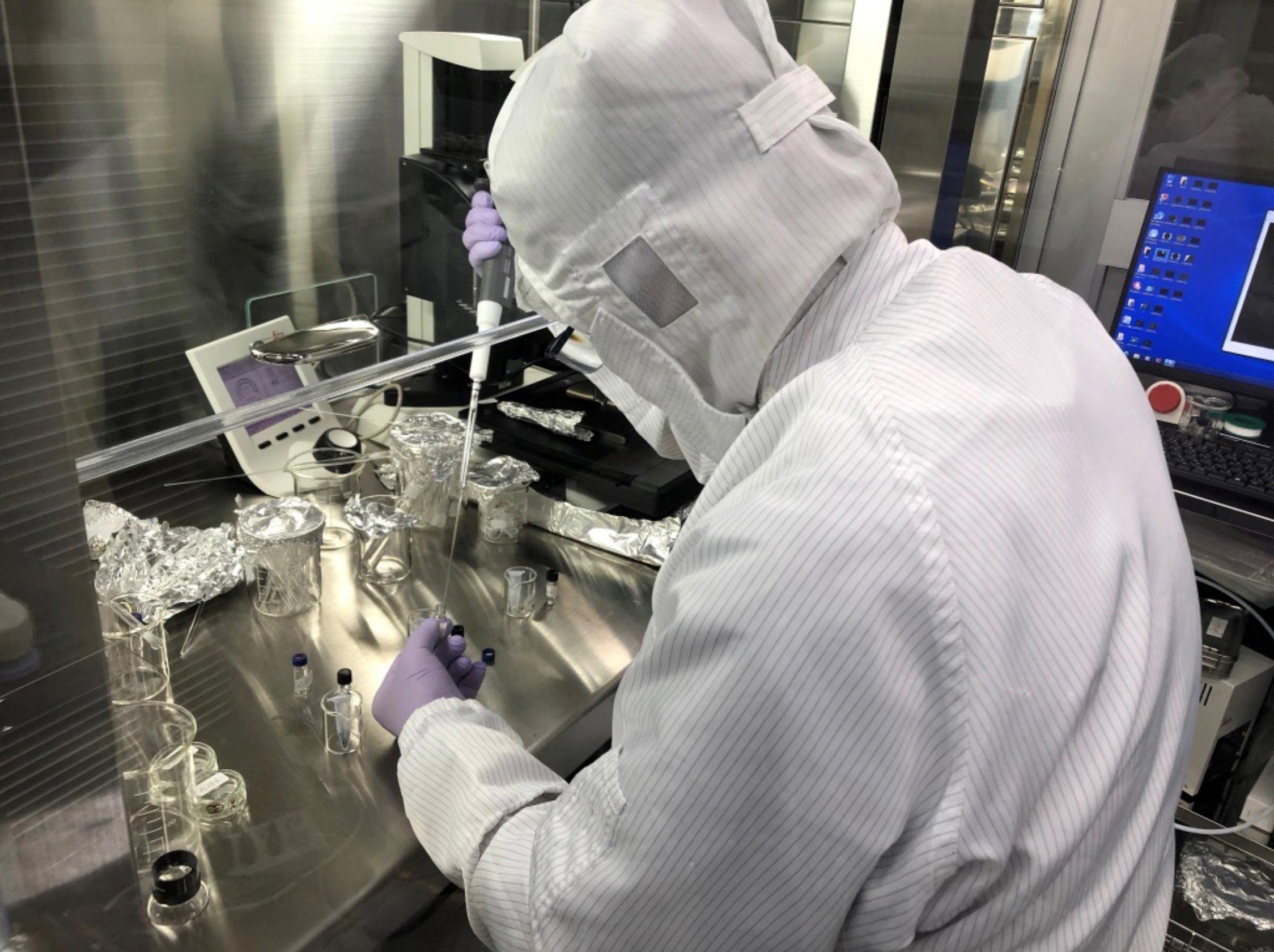
Solvent extractions of the Ryugu samples on a clean bench (ISO6, Class 100) inside a clean room (ISO5, Class 1000) performed by Hiroshi Naraoka at Kyushu University in Japan. Credit: JAXA
“So far, the amino acid results from Ryugu are mostly consistent with what has been seen in certain types of carbon-rich (carbonaceous) meteorites that have been exposed to the most water in space,” said Jason Dworkin of NASA’s Goddard Space Flight Center in Greenbelt, Maryland, a co-author of the paper.
“However, sugars and nucleobases (components of
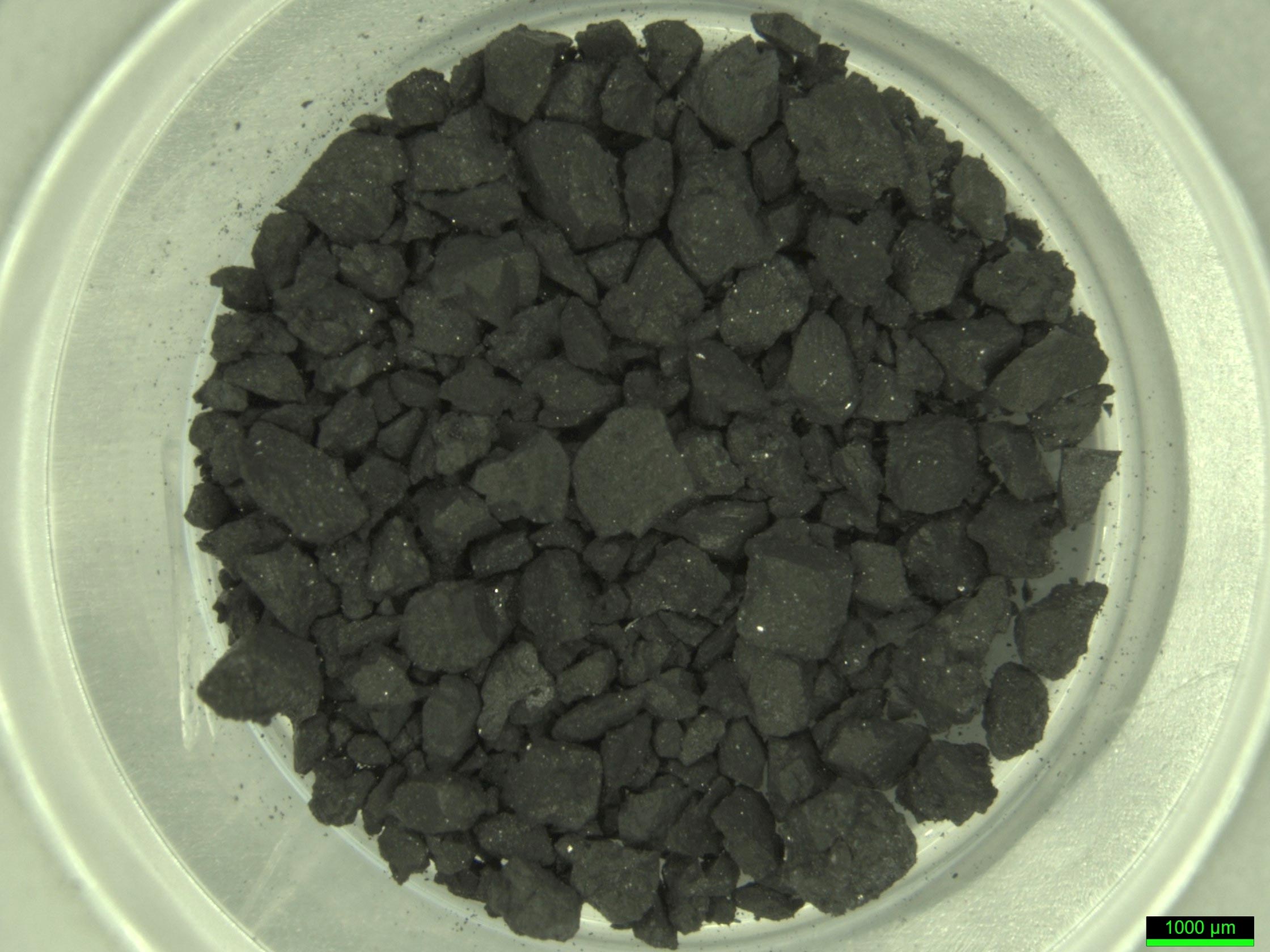
Aggregate sample of the Ryugu grains (A0106) allocated to the Hayabusa2 Initial Analysis Soluble Organic Matter Team from the Japan Aerospace Exploration Agency for a variety of organic molecular analyses. Credit: JAXA