


By NASASeptember 24, 2022
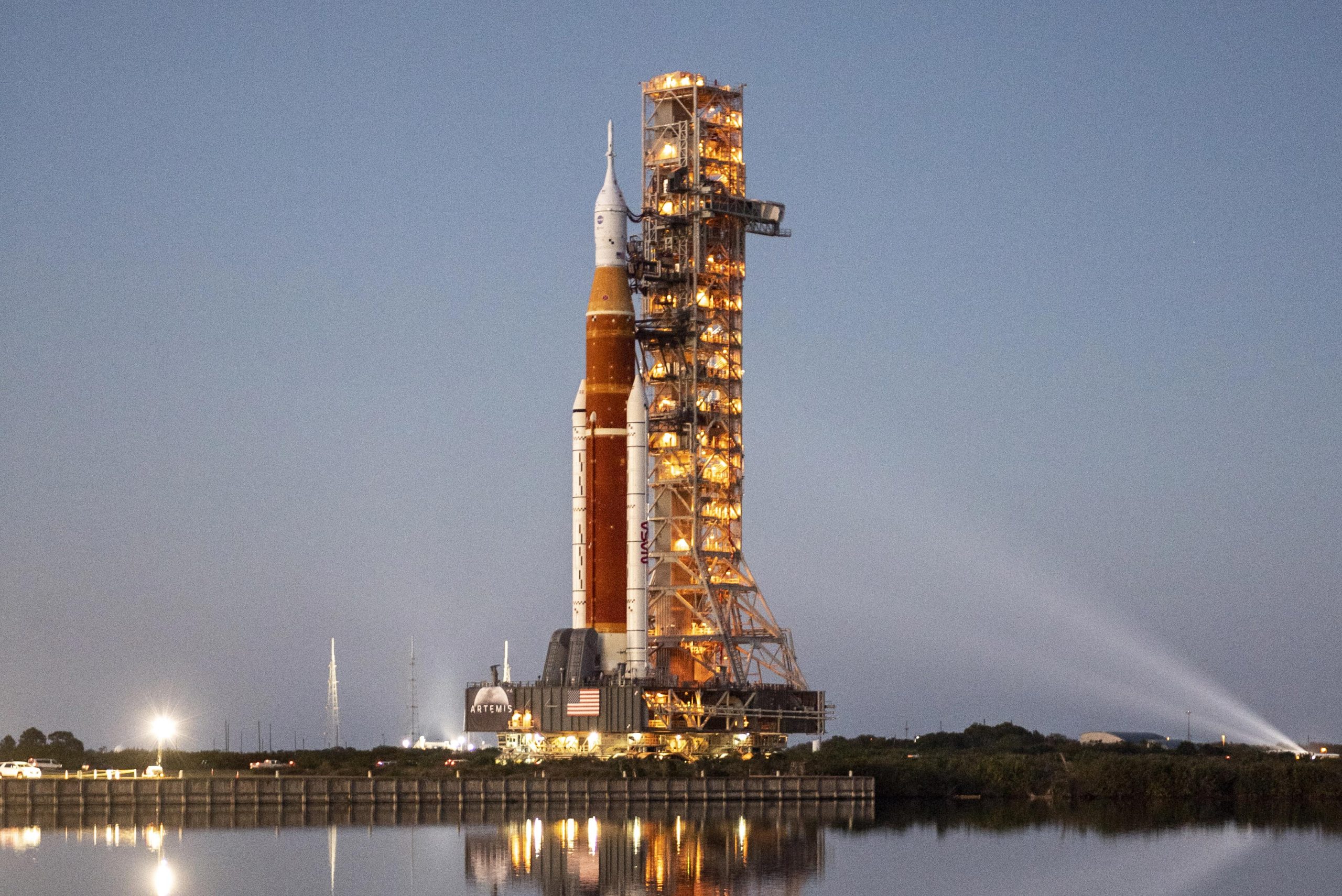
NASA’s Space Launch System (SLS) rocket with the Orion spacecraft aboard is seen atop a mobile launcher as it rolls out to Launch Complex 39B for the first time on Thursday, March 17, 2022, at NASA’s Kennedy Space Center in Florida. Credit: NASA/Keegan Barber
Tropical Storm Ian. This graphic shows probabilities of sustained (1-minute average) surface wind speeds equal to or exceeding 34 kt (39 mph). This wind speed probability graphic is based on the official National Hurricane Center (NHC) track, intensity, and wind radii forecasts, and on NHC forecast error statistics for those forecast variables during recent years. It provides cumulative probabilities that wind speeds of at least 39 mph will occur during cumulative time periods at each specific point on the map. Credit: NOAA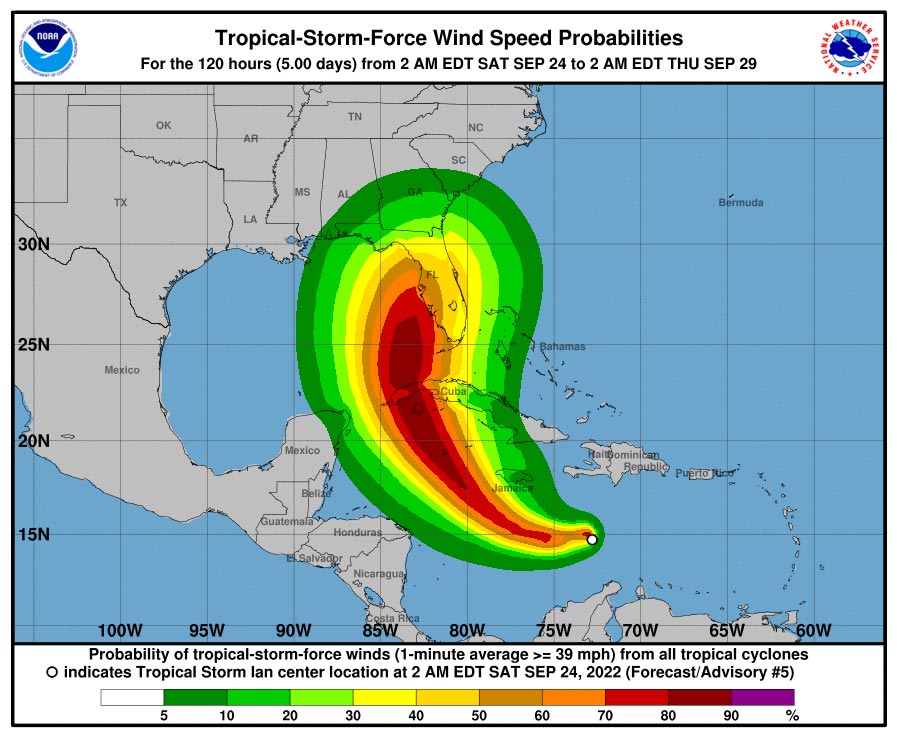
NASA is taking a step-wise approach to its decision-making process to allow the agency to protect its employees by completing a safe roll in time for them to address the needs of their families while also protecting for the option to press ahead with another launch opportunity in the current window if weather predictions improve.
The agency is grateful to its partners at the National Oceanic and Atmospheric Administration (NOAA), United State Space Force, and the National Hurricane Center (NHC) for providing the highest quality products to protect our nation’s flight test that will pave the way to return humanity to the Moon.